[et_pb_section admin_label=”section”][et_pb_row admin_label=”row”][et_pb_column type=”3_4″][et_pb_text admin_label=”Text” background_layout=”light” text_orientation=”left” use_border_color=”off” border_color=”#ffffff” border_style=”solid”]
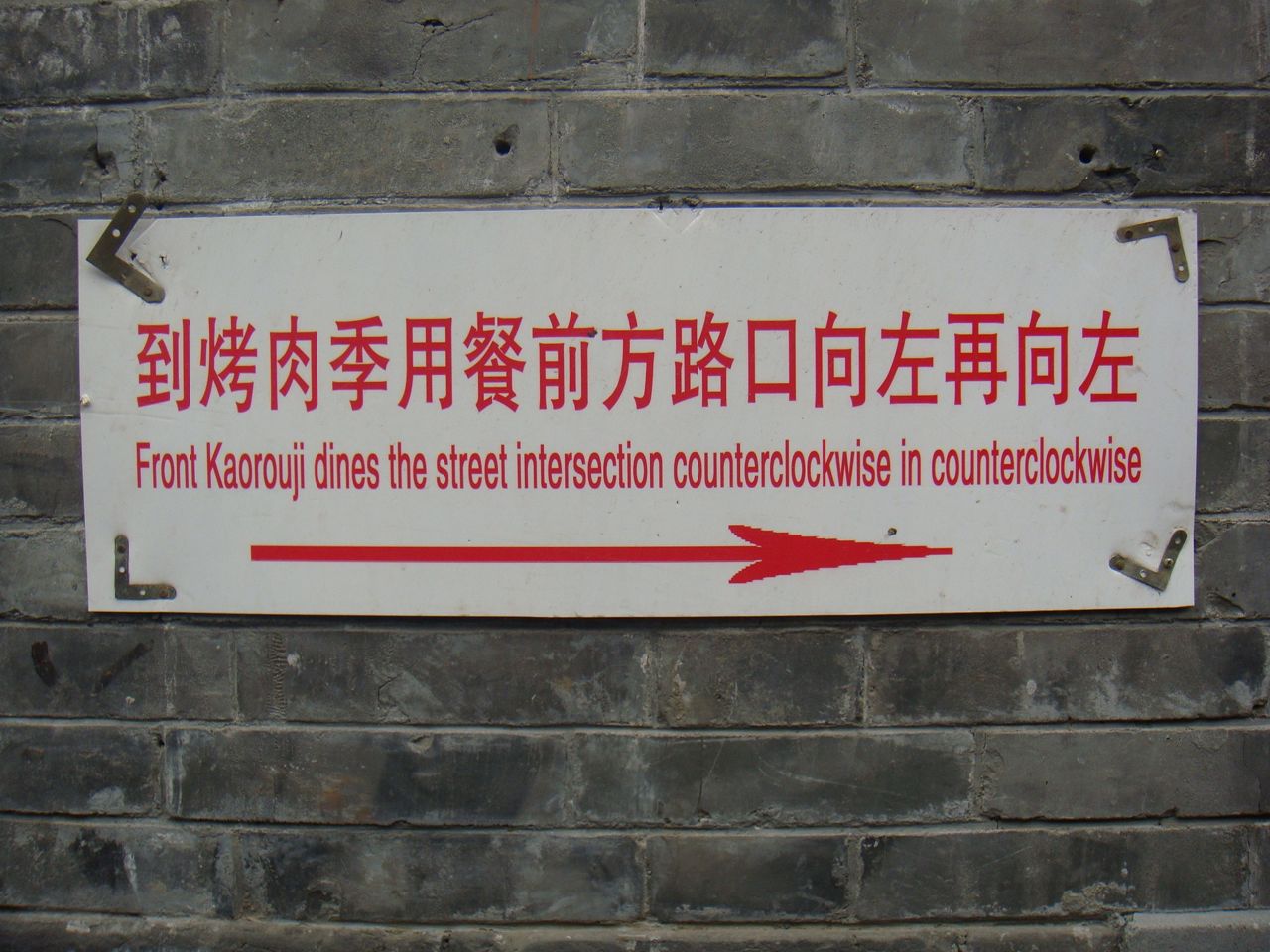
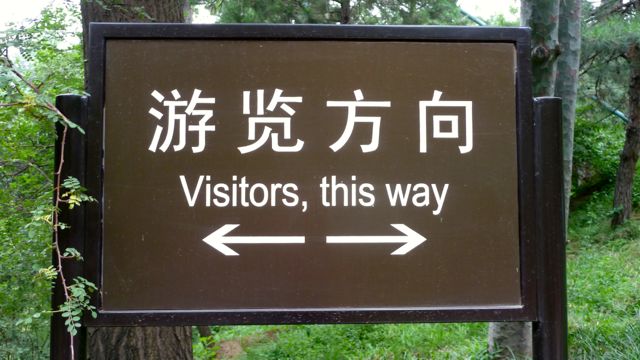
No matter what country you travel to, it is helpful to learn a few key phrases. For China this is important, because most people don’t speak English, and Mandarin is very different. Fear not. Try to learn a few words, and locals may point you in the right direction!
[/et_pb_text][et_pb_image admin_label=”Chinese on Wanfujing Street Beijing” src=”https://journeyswithstephen.com/wp-content/uploads/2016/10/Chinese-Wanfujing-Street-Beijing-China.jpg” alt=”Chinese on Wanfujing Street Beijing” title_text=”Chinese on Wanfujing Street Beijing” show_in_lightbox=”off” url_new_window=”off” use_overlay=”off” animation=”off” sticky=”off” align=”left” force_fullwidth=”off” always_center_on_mobile=”on” use_border_color=”off” border_color=”#ffffff” border_style=”solid”] [/et_pb_image][et_pb_text admin_label=”Text” background_layout=”light” text_orientation=”left” use_border_color=”off” border_color=”#ffffff” border_style=”solid”]
Before we begin, let’s clear up a few things:
The common words I present here are only intended to show people that you respect their language and have made the effort to learn a tiny bit. It is more for setting the tone for your interaction.
Speaking of tone, Chinese is a language of sounds, where a word can have vastly different meanings depending on the tone used. That is too complicated for this exercise. Fortunately, if people understand the context (“How much does this cost?” while you are holding an item in a store), they will probably understand you. I will also help by showing phonetic spellings here.
You won’t be able to read Chinese characters, but sometimes words might be written in both characters and in pinyin, the English alphabet version of Mandarin. I also include pinyin here.
[/et_pb_text][et_pb_image admin_label=”4-star toilet sign Beijing” src=”https://journeyswithstephen.com/wp-content/uploads/2016/10/4-star-toilet-sign-Beijing-China.jpg” alt=”4-star toilet sign Beijing” title_text=”4-star toilet sign Beijing” show_in_lightbox=”off” url_new_window=”off” use_overlay=”off” animation=”off” sticky=”off” align=”left” force_fullwidth=”off” always_center_on_mobile=”on” use_border_color=”off” border_color=”#ffffff” border_style=”solid”] [/et_pb_image][et_pb_text admin_label=”Text” background_layout=”light” text_orientation=”left” use_border_color=”off” border_color=”#ffffff” border_style=”solid”]
Keep it simple. I have seen guidebooks that teach you how to say in Chinese, “What types of hotel rooms do you have available?” If the desk clerk actually understands you, she will rattle off a long answer in Chinese, and you won’t have understood a word of her reply.
Learning how to say, “Do you speak English?” in a foreign language is a waste of time. That is the one question you should ask in English! The answer will range from, “yes” to “a little” to a headshake. Take it from there. She may even be anxious to try out her English on you!
While all written Chinese is the same, there are two very different spoken versions of the language (besides lots of dialects). Mandarin is the official version, which I present here. But if you are in the south of China or Hong Kong, you may hear Cantonese spoken. It is different, although most Cantonese can understand Mandarin. Got it?
I must reiterate that this is just a way to be polite and show you are making an attempt to communicate. Don’t forget to use apps for other purposes. For example, Waygo enables you to point your phone camera at a sign written in Chinese, and the app will translate it into English. Some apps allow you to speak and listen, but note, Google doesn’t work in China.
[/et_pb_text][et_pb_image admin_label=”Hilly road sign Beijing” src=”https://journeyswithstephen.com/wp-content/uploads/2016/10/Hilly-road-sign-Beijing-China.jpg” alt=”Hilly road sign Beijing” title_text=”Hilly road sign Beijing” show_in_lightbox=”off” url_new_window=”off” use_overlay=”off” animation=”off” sticky=”off” align=”left” force_fullwidth=”off” always_center_on_mobile=”on” use_border_color=”off” border_color=”#ffffff” border_style=”solid”] [/et_pb_image][et_pb_text admin_label=”Text” background_layout=”light” text_orientation=”left” use_border_color=”off” border_color=”#ffffff” border_style=”solid”]
That said, let’s get started with some common, useful Chinese words for travel.
1. Hello, hi
ni hao (written in pinyin) pronounced as (nee how)
This is the most common greeting and can be said to everyone.
2. How are you?
ni hao ma? (nee how ma)
Just add “ma” to ni hao. Easy, right?
3. Good morning
zao (dzow)
A common, friendly greeting in the morning, instead of ni hao.
4. Hello (answer phone)
wei (way)
You will hear people answer their phones with wei instead of ni hao.
5. Good
hao (how)
Hopefully, it’s your answer to the question “ni hao ma?”
6. Very good
hen hao (hen how)
If you have made it this far, then “hen hao.”
7. Thank you
xie xie (shyeah shyeah)
This is the most mispronounced phrase by foreigners. Don’t say “shee shee!”
It is softer: sh-yeah sh-yeah or even see-yeah see-yeah.
[/et_pb_text][et_pb_image admin_label=”Group smiling on Great Wall of China” src=”https://journeyswithstephen.com/wp-content/uploads/2016/10/Great-Wall-of-China-smiles.jpg” alt=”Group smiling on Great Wall of China” title_text=”Group smiling on Great Wall of China” show_in_lightbox=”off” url_new_window=”off” use_overlay=”off” animation=”off” sticky=”off” align=”left” force_fullwidth=”off” always_center_on_mobile=”on” use_border_color=”off” border_color=”#ffffff” border_style=”solid”] [/et_pb_image][et_pb_text admin_label=”Text” background_layout=”light” text_orientation=”left” use_border_color=”off” border_color=”#ffffff” border_style=”solid”]
8. You’re welcome
bukeqi (boo kuh chee)
If someone thanks you, say this in return. They will smile at your politeness.
9. No problem, it’s nothing
meishi (may shrr)
You may hear this often after you thank someone.
10. Sorry, excuse me
duibuqi (dway boo chee)
“Sorry” is usually in my top 10 for any language, because I say it a lot!
11. Good-bye
zaijian (dzeye jee-en)
Zaijian is somewhat formal. The good news is, you can just say “bye bye!”
12. 1, 2, 3
yi, er, san (ee, are, san)
Try saying this just before taking someone’s picture. It always brings a smile.
13. How much?
duo shao (doo-ah shaow)
14. Money, cost
qian (chee-en)
Duoshao qian would therefore mean, “how much does this cost?”
[/et_pb_text][et_pb_image admin_label=”Stephen Henson Beijing restaurant” src=”https://journeyswithstephen.com/wp-content/uploads/2016/10/Stephen-Henson-Beijing-China-restaurant.jpg” alt=”Stephen Henson Beijing restaurant” title_text=”Stephen Henson Beijing restaurant” show_in_lightbox=”off” url_new_window=”off” use_overlay=”off” animation=”off” sticky=”off” align=”left” force_fullwidth=”off” always_center_on_mobile=”on” use_border_color=”off” border_color=”#ffffff” border_style=”solid”] [/et_pb_image][et_pb_text admin_label=”Text” background_layout=”light” text_orientation=”left” use_border_color=”off” border_color=”#ffffff” border_style=”solid”]
15. Bottle of water
ping shui (ping shway)
16. Cola
kele (kuhluh)
17. Waiter, attendant
fuwuyuan (foo woo yoo-an)
It’s all right to say that loudly in a restaurant to get his attention.
18. Please give me…
qing ni gei wo (ching nee gay wuh)
Then order a bottle of cola or water!
19. Bathroom or restroom
cesuo (tser swor) or weishengjian (way shung jee-en)
“Bathroom is where?” would be “weishengjian zai nar?”
[/et_pb_text][et_pb_image admin_label=”Restroom door in China” src=”https://journeyswithstephen.com/wp-content/uploads/2016/10/Restroom-door-in-China.jpg” alt=”Restroom door in China” title_text=”Restroom door in China” show_in_lightbox=”off” url_new_window=”off” use_overlay=”off” animation=”off” sticky=”off” align=”left” force_fullwidth=”off” always_center_on_mobile=”on” use_border_color=”off” border_color=”#ffffff” border_style=”solid”] [/et_pb_image][et_pb_text admin_label=”Text” background_layout=”light” text_orientation=”left” use_border_color=”off” border_color=”#ffffff” border_style=”solid”]
20. U.S., America
Meiguo (may gwah)
21. China
Zhongguo (joong gwah)
22. Person
ren (ren)
So, for example, American is Meiguo ren
23. Yes, no
dui (dway), bu (boo)
This is trickier, as dui only means “correct,” not other ways to say “yes.”
You may often hear it quickly repeated, dui dui dui, like yeah, yeah, yeah.
And bu can be a little strong, which sometimes is bu hao or “not good.”
24. Beijing
Beijing (bay jing)
I include this city because Americans say bay-zhing, which drives me crazy.
It is a “hard j,” like jingle bells.
25. Shanghai
Shanghai (shahng high)
Mispronouncing this to rhyme with twang also drives me crazy.
[/et_pb_text][et_pb_image admin_label=”Beijing China airport sign” src=”https://journeyswithstephen.com/wp-content/uploads/2016/10/Beijing-China-airport-sign.jpg” alt=”Beijing China airport sign” title_text=”Beijing China airport sign” show_in_lightbox=”off” url_new_window=”off” use_overlay=”off” animation=”off” sticky=”off” align=”left” force_fullwidth=”off” always_center_on_mobile=”on” use_border_color=”off” border_color=”#ffffff” border_style=”solid”] [/et_pb_image][et_pb_text admin_label=”Text” background_layout=”light” text_orientation=”left” use_border_color=”off” border_color=”#ffffff” border_style=”solid”]
How to make this work? If you and a travel partner are making your first trip to China, I suggest you practice this on each other during the flight there. Then you can say “ni hao!” to “Zhongguo ren” on arrival.
And, if you’re looking for a bit more perspective on the adventures of trying to speak Chinese, take a few minutes to read one of my other posts: Welcome to China, where you can’t speak, read or write.
Look for a future post about useful Spanish phrases for travelers!
[/et_pb_text][/et_pb_column][et_pb_column type=”1_4″][et_pb_social_media_follow admin_label=”Social Media Follow” link_shape=”rounded_rectangle” background_layout=”light” url_new_window=”on” follow_button=”on” saved_tabs=”all”] [et_pb_social_media_follow_network social_network=”instagram” url=”http://www.instagram.com/journeyswithstephen” skype_action=”call” bg_color=”#517fa4″] Instagram [/et_pb_social_media_follow_network][et_pb_social_media_follow_network social_network=”twitter” url=”http://www.twitter.com/journeystephen” skype_action=”call” bg_color=”#00aced”] Twitter [/et_pb_social_media_follow_network][et_pb_social_media_follow_network social_network=”facebook” url=”http://www.facebook.com/journeyswithstephen” skype_action=”call” bg_color=”#3b5998″] facebook [/et_pb_social_media_follow_network] [/et_pb_social_media_follow][/et_pb_column][/et_pb_row][/et_pb_section]