Tag: UNESCO

  • Huangshan, China’s mountain gem

    Huangshan, China’s mountain gem

    [et_pb_section admin_label=”section”][et_pb_row admin_label=”row”][et_pb_column type=”3_4″][et_pb_text admin_label=”Text” background_layout=”light” text_orientation=”left” use_border_color=”off” border_color=”#ffffff” border_style=”solid”]

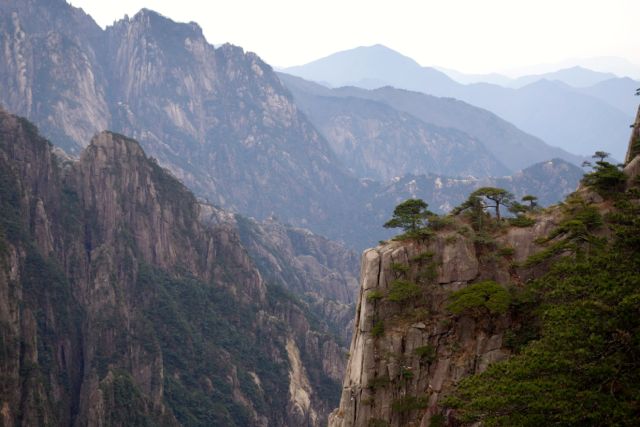
    We gaze at the imposing granite peaks dating back to the Jurassic Period. Gnarled pine trees grow mystically out of the rock. The mountains seem to float on endlessly. But this Avatar-like scene is devoid of any Western tourists during our visit. They are missing China’s hidden gem.

    These fascinating mountains, often enshrined in a sea of clouds, have long infatuated Chinese poets and landscape artists. They even inspired the Shanshui (mountain and water) school of painting, dating back to the Ming Dynasty of the 16th century. The landscape has not escaped the attention of UNESCO either, being named a World Heritage Site in 1990 as “the loveliest mountain in China.” And today, a remarkable 2.74 million travelers visit the popular retreat in the south of Anhui Province, annually.

    [/et_pb_text][et_pb_image admin_label=”Huangshan Mountain cliff temple China” src=”https://journeyswithstephen.com/wp-content/uploads/2017/05/Huangshan-Mountain-cliff-temple-China.jpg” alt=”Huangshan Mountain cliff temple China” title_text=”Huangshan Mountain cliff temple China” show_in_lightbox=”off” url_new_window=”off” use_overlay=”off” animation=”off” sticky=”off” align=”left” force_fullwidth=”off” always_center_on_mobile=”on” use_border_color=”off” border_color=”#ffffff” border_style=”solid”] [/et_pb_image][et_pb_text admin_label=”Text” background_layout=”light” text_orientation=”left” use_border_color=”off” border_color=”#ffffff” border_style=”solid”]

    So where are the Western tourists? Well, to begin with, China’s tourism machine doesn’t promote this iconic setting. Visitors are beckoned to Beijing to see the historic Forbidden City, Temple of Heaven, and Summer Palace. While there, they would be remiss if they didn’t take a convenient side trip to The Great Wall. Go to Shanghai and see 21st century China on display, spectacular by day and night. Even Chengdu is accessible via a manageable flight, and a panda preserve is right in the city. Tour groups love to shepherd Westerners on a boat through the Three Gorges. And don’t forget the Terracotta Warriors, a quick drive from the Xian airport.

    Huangshan is a little trickier. The city of Huangshan is about 410 km (255 mi) southwest of Shanghai and 250 km (155 mi) west of Hangzhou. High-speed trains are the most practical way to make that connection. Beijing is further to the north, with the fastest train taking about 6 hours. But you are not really near the mountain when you arrive in Huangshan.

    [/et_pb_text][et_pb_image admin_label=”Huangshan Mountain China map” src=”https://journeyswithstephen.com/wp-content/uploads/2017/05/Huangshan-Mountain-China-map.jpg” alt=”Huangshan Mountain China map” title_text=”Huangshan Mountain China map” show_in_lightbox=”off” url_new_window=”off” use_overlay=”off” animation=”off” sticky=”off” align=”left” force_fullwidth=”off” always_center_on_mobile=”on” use_border_color=”off” border_color=”#ffffff” border_style=”solid”] [/et_pb_image][et_pb_text admin_label=”Text” background_layout=”light” text_orientation=”left” use_border_color=”off” border_color=”#ffffff” border_style=”solid”]

    You can hire a driver or take a taxi or find a bus from the train station, but it is a confusing setup. And all signs are in Chinese only – everything. In hindsight, I would check into a reputable hotel in the area and have them arrange a guide for you, including on the mountain itself. Getting there is tricky and even with the help of several cable cars the mountain trails can be a navigational challenge.

    Do not let this caution stop you from visiting some of the most remarkable vistas on the planet. The scenic area covers more than 150 square kilometers, with a wondrously diverse ecosystem. The “Four Wonders of Huangshan” are the spectacular rocks formations, the oddly shaped pine trees, hot springs, and the “sea of clouds.” It is no wonder that for centuries they have been thrilling those who journey there.

    [/et_pb_text][et_pb_image admin_label=”Yellow Mountain Huangshan China” src=”https://journeyswithstephen.com/wp-content/uploads/2017/05/Yellow-Mountain-Huangshan-China.jpg” alt=”Yellow Mountain Huangshan China” title_text=”Yellow Mountain Huangshan China” show_in_lightbox=”off” url_new_window=”off” use_overlay=”off” animation=”off” sticky=”off” align=”left” force_fullwidth=”off” always_center_on_mobile=”on” use_border_color=”off” border_color=”#ffffff” border_style=”solid”] [/et_pb_image][et_pb_text admin_label=”Text” background_layout=”light” text_orientation=”left” use_border_color=”off” border_color=”#ffffff” border_style=”solid”]

    According to legend, the Yellow Emperor, Huang Di, born in 2717 BC, was a disciple of two Chinese Daoist masters. They were alchemists who sought to make pills of immortality. They chose this mountain region as a place that was close to both the spirit and physical worlds. It was here that the Yellow Emperor swallowed their golden pill and after soaking in a hot spring for 7 days, became immortal. The mountain range was later renamed Huangshan (Yellow Mountain) in his honor.

    Renowned environmental advocate Edward Abbey once famously stated, “May your trails be crooked, winding, lonesome, dangerous, leading to the most amazing view.” Fortunately for travelers like us, Huangshan has been architected with tens of thousands of stone steps in lieu of rocky, dirt paths, and there are tasteful wooden fences that keep you from falling over a cliff. With apologies to Edward, the views are still amazing.

    [/et_pb_text][et_pb_image admin_label=”Stephen Henson Huangshan Mountain China” src=”https://journeyswithstephen.com/wp-content/uploads/2017/05/Stephen-Henson-Huangshan-Mountain-China.jpg” alt=”Stephen Henson Huangshan Mountain China” title_text=”Stephen Henson Huangshan Mountain China” show_in_lightbox=”off” url_new_window=”off” use_overlay=”off” animation=”off” sticky=”off” align=”left” force_fullwidth=”off” always_center_on_mobile=”on” use_border_color=”off” border_color=”#ffffff” border_style=”solid”] [/et_pb_image][et_pb_text admin_label=”Text” background_layout=”light” text_orientation=”left” use_border_color=”off” border_color=”#ffffff” border_style=”solid”]

    Upon arrival, we take the Taiping Cableway (one of three on the mountain range) to its upper station in hopes that from there the hiking will be more or less downhill. It is less. But the mountains are so majestic that we don’t mind traversing stone steps, up and down and up and down. The stops are frequent for photos of the stunning vistas.

    Some of the peaks rise more than 1,000 meters above the forest floor below. Many have been given artistic and even whimsical names, such as Immortal on Stilts, Farewell to My Concubine, Rock Fell from Sky, Buddha Hand Writing a Sealed Book, and Monkey Looking Over the Sea.

    [/et_pb_text][et_pb_image admin_label=”Monkey Huangshan Mountain China” src=”https://journeyswithstephen.com/wp-content/uploads/2017/05/Monkey-Huangshan-Mountain-China.jpg” alt=”Monkey Huangshan Mountain China” title_text=”Monkey Huangshan Mountain China” show_in_lightbox=”off” url_new_window=”off” use_overlay=”off” animation=”off” sticky=”off” align=”left” force_fullwidth=”off” always_center_on_mobile=”on” use_border_color=”off” border_color=”#ffffff” border_style=”solid”] [/et_pb_image][et_pb_text admin_label=”Text” background_layout=”light” text_orientation=”left” use_border_color=”off” border_color=”#ffffff” border_style=”solid”]

    In fact, there are monkeys to be found perched on the rocks. We admire their ability to maneuver a steep precipice like no human could. Interesting animals aside, the other striking feature of this region is the magnificent pine forest. Rising from gaps in the rocks, clinging to cliffs, they help to create a magical landscape that seems more like a painting than reality.

    Four hours and a hundred photos later, a check of the health app on my phone confirms we have walked more than 12,000 steps and 105 floors! You don’t need to be an expert hiker to enjoy Huangshan, but you do need the stamina for a lot of vertical walking.

    [/et_pb_text][et_pb_image admin_label=”stone steps Huangshan China” src=”https://journeyswithstephen.com/wp-content/uploads/2017/05/stone-steps-Huangshan-China.jpg” alt=”stone steps Huangshan China” title_text=”stone steps Huangshan China” show_in_lightbox=”off” url_new_window=”off” use_overlay=”off” animation=”off” sticky=”off” align=”left” force_fullwidth=”off” always_center_on_mobile=”on” use_border_color=”off” border_color=”#ffffff” border_style=”solid”] [/et_pb_image][et_pb_text admin_label=”Text” background_layout=”light” text_orientation=”left” use_border_color=”off” border_color=”#ffffff” border_style=”solid”]

    Some visitors recommend climbing up the mountain in one day, staying at a hotel near the top, and walking down on day two. We choose to use cable cars for part of the journey and turn the venture into a day trip. The hotels we see are far from upscale and yet still expensive, because all supplies must be hand-carried to the summit. Even choosing the day-trip route, we are exhausted.

    Also be sure to check the weather before making the trek to Huangshan. One of its four wonders is the “sea of clouds.” We go on a mostly cloudy day, but with great visibility. There are times when clouds or fog can swoop in and create some mystical visual effects – or obscure your view altogether. I would not want to deal with hiking the area in the cold and rain, which can also be frequent certain times of the year. In other words, do your research!

    [/et_pb_text][et_pb_image admin_label=”Lucun China rapeseed” src=”https://journeyswithstephen.com/wp-content/uploads/2017/05/Lucun-China-rapeseed.jpg” alt=”Lucun China rapeseed” title_text=”Lucun China rapeseed” show_in_lightbox=”off” url_new_window=”off” use_overlay=”off” animation=”off” sticky=”off” align=”left” force_fullwidth=”off” always_center_on_mobile=”on” use_border_color=”off” border_color=”#ffffff” border_style=”solid”] [/et_pb_image][et_pb_text admin_label=”Text” background_layout=”light” text_orientation=”left” use_border_color=”off” border_color=”#ffffff” border_style=”solid”]

    As magnificent as Huangshan is, there are other not-to-be-missed sites in the region. Hongcun Ancient Village and Lucun Village are each worth several hours of exploration and will be the subject of another post.

    Have you been to Huangshan? What are your impressions? Feel free to comment below.

    [/et_pb_text][/et_pb_column][et_pb_column type=”1_4″][et_pb_text admin_label=”Text” background_layout=”light” text_orientation=”left” use_border_color=”off” border_color=”#ffffff” border_style=”solid”]

    What’s upscale?

    A stay at the Banyan Tree Huangshan is luxurious, but can be expensive depending on the season. Check various dates if possible, as rates vary widely. Also note, that despite Huangshan in the name, the Banyan Tree is more than an hour from the mountain.

    What’s budget?

    Like many UNESCO sites, admission prices are reasonable.


    [/et_pb_text][et_pb_social_media_follow admin_label=”Social Media Follow” link_shape=”rounded_rectangle” background_layout=”light” url_new_window=”on” follow_button=”on” saved_tabs=”all”] [et_pb_social_media_follow_network social_network=”instagram” url=”http://www.instagram.com/journeyswithstephen” skype_action=”call” bg_color=”#517fa4″] Instagram [/et_pb_social_media_follow_network][et_pb_social_media_follow_network social_network=”twitter” url=”http://www.twitter.com/journeystephen” skype_action=”call” bg_color=”#00aced”] Twitter [/et_pb_social_media_follow_network][et_pb_social_media_follow_network social_network=”facebook” url=”http://www.facebook.com/journeyswithstephen” skype_action=”call” bg_color=”#3b5998″] facebook [/et_pb_social_media_follow_network] [/et_pb_social_media_follow][/et_pb_column][/et_pb_row][/et_pb_section]
  • Time is now to visit Luang Prabang, Laos

    Time is now to visit Luang Prabang, Laos

    [et_pb_section fb_built=”1″ admin_label=”section” _builder_version=”3.22″][et_pb_row admin_label=”row” _builder_version=”3.25″ background_size=”initial” background_position=”top_left” background_repeat=”repeat” column_structure=”3_4,1_4″][et_pb_column type=”3_4″ _builder_version=”3.25″ custom_padding=”|||” custom_padding__hover=”|||”][et_pb_text admin_label=”Text” _builder_version=”3.27.4″ background_size=”initial” background_position=”top_left” background_repeat=”repeat” use_border_color=”off” border_color=”#ffffff” border_style=”solid”]Luang Prabang sits about mid-way between Bangkok and Hanoi, but it is centuries apart. The time is now to visit Luang Prabang, Laos before tourism turns it into another bustling Southeast Asia city or even another Seam Reap. I will show you some of my favorite things to do in this beautiful land.

    Walking the city

    One legend about the creation of Luang Prabang tells us that Buddha would have smiled when he rested there during his travels. The city takes its name from a statue of Buddha, a gift from Cambodia. In declaring it a World Heritage town, UNESCO describes its “unique, remarkably-preserved townscape” as “an outstanding example of the fusion of traditional architecture and Lao urban structures with those built by European colonial authorities.”
    [/et_pb_text][et_pb_image src=”https://journeyswithstephen.com/wp-content/uploads/2017/03/Colorful-Wat-Luang-Prabang-Laos.jpg” alt=”Colorful Wat Luang Prabang Laos” title_text=”Colorful Wat Luang Prabang Laos” align_tablet=”center” align_last_edited=”on|desktop” admin_label=”Colorful Wat Luang Prabang Laos” _builder_version=”3.23″ use_border_color=”off” border_color=”#ffffff” border_style=”solid” animation=”off” sticky=”off” always_center_on_mobile=”on”] [/et_pb_image][et_pb_text admin_label=”Text” _builder_version=”3.27.4″ background_size=”initial” background_position=”top_left” background_repeat=”repeat” use_border_color=”off” border_color=”#ffffff” border_style=”solid”]Indeed, the city itself is small and walkable in a day. I duck into numerous little shops in search of an eggcup, a rarity in Asia. There are plenty of incense burners, candleholders, small teacups and other near misses. At least it gives me a chance to interact with the friendly merchants. In fact, I am to find the Lao people to be perhaps the warmest and kindest people in my travels across Asia.

    Temples (wats) mix with shops and restaurants in this charming town. It is smart to walk the length of the main street (Sisavangvong becomes Sakkaling), as well as venturing onto interesting side streets. The Mekong River and Nam Khan bend around the city to form a convenient peninsula. My detailed local map amuses me, listing points such as “sometimes walk bridge,” for pedestrian river crossings, only in dry season.
    [/et_pb_text][et_pb_image src=”https://journeyswithstephen.com/wp-content/uploads/2017/03/3-monks-Luang-Prabang-Laos-1.jpg” alt=”3 monks Luang Prabang Laos” title_text=”3 monks Luang Prabang Laos” align_tablet=”center” align_last_edited=”on|desktop” admin_label=”3 monks Luang Prabang Laos” _builder_version=”3.23″ use_border_color=”off” border_color=”#ffffff” border_style=”solid” animation=”off” sticky=”off” always_center_on_mobile=”on”] [/et_pb_image][et_pb_text admin_label=”Text” _builder_version=”3.27.4″ background_size=”initial” background_position=”top_left” background_repeat=”repeat” use_border_color=”off” border_color=”#ffffff” border_style=”solid”]The colorful wats are numerous, nearly one on every block. And active with young monks after “tak bat,” the daily procession to receive alms. Another line forms at one of the many coffee shops. School children pour out onto the street at lunchtime, heading back home to eat. It seems like a young society.
    [/et_pb_text][et_pb_image src=”https://journeyswithstephen.com/wp-content/uploads/2017/03/Mount-Phousi-Luang-Prabang-Laos.jpg” alt=”Mount Phousi Luang Prabang Laos” title_text=”Mount Phousi Luang Prabang Laos” align_tablet=”center” align_last_edited=”on|desktop” admin_label=”Mount Phousi Luang Prabang Laos” _builder_version=”3.23″ use_border_color=”off” border_color=”#ffffff” border_style=”solid” animation=”off” sticky=”off” always_center_on_mobile=”on”] [/et_pb_image][et_pb_text admin_label=”Text” _builder_version=”3.27.4″ background_size=”initial” background_position=”top_left” background_repeat=”repeat” use_border_color=”off” border_color=”#ffffff” border_style=”solid”]

    Mount Phousi

    Speaking of wats, there are several to found on Phousi Hill or Mount Phousi, which dominates the landscape of the center of town. The conventional wisdom is to climb the 100-meter high religious site to Wat Chom Si, at its summit, in time for sunset. There are two good reasons for this. One, the climb is painstaking, so best to avoid the blazing temperatures and humidity of the middle of the day. Two, the view is spectacular over the city and surrounding countryside.

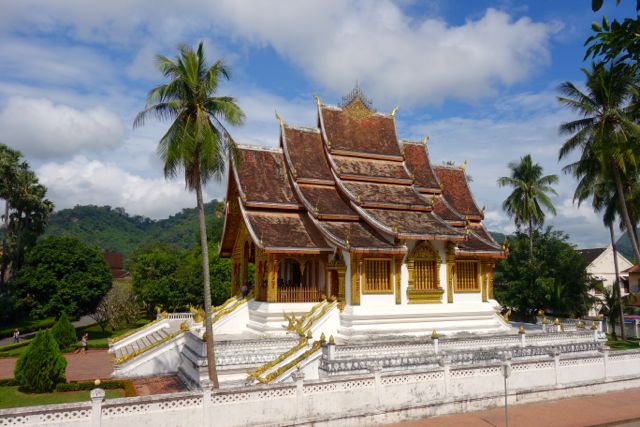
    From the base at Ratsavang Road, I buy a bottle of water, and then walk up the more than 300 steep steps on the shady backside of the hill. My descent is from the front, with great views of Haw Pha Bang or Royal temple, arguably the most beautiful of Luang Prabang’s monuments. This also places me in the heart of the night market just as it begins to rev up.
    [/et_pb_text][et_pb_image src=”https://journeyswithstephen.com/wp-content/uploads/2017/03/Night-market-Luang-Prabang-Laos.jpg” alt=”Night market Luang Prabang Laos” title_text=”Night market Luang Prabang Laos” align_tablet=”center” align_last_edited=”on|desktop” admin_label=”Night market Luang Prabang Laos” _builder_version=”3.23″ use_border_color=”off” border_color=”#ffffff” border_style=”solid” animation=”off” sticky=”off” always_center_on_mobile=”on”] [/et_pb_image][et_pb_text admin_label=”Text” _builder_version=”3.27.4″ background_size=”initial” background_position=”top_left” background_repeat=”repeat” use_border_color=”off” border_color=”#ffffff” border_style=”solid”]The main street in town turns into a pedestrian-only zone every evening for the sprawling night market. Like most Laos events I encounter, it seems to have a more casual feel than the highly organized, sometimes frenetic night markets in places like Chiang Mai. Cars and tuk tuks disappear and handicrafts are neatly spread out on the street.

    My first night, the electricity in town goes out, replaced by candles and little generators powering strands of single light bulbs. I am told this happens often enough that everyone from vendors to restaurants is able to quickly cope with the inconvenience.
    [/et_pb_text][et_pb_image src=”https://journeyswithstephen.com/wp-content/uploads/2017/03/Cascading-Kuang-Si-waterfalls-Laos.jpg” alt=”Cascading Kuang Si waterfalls Laos” title_text=”Cascading Kuang Si waterfalls Laos” align_tablet=”center” align_last_edited=”on|desktop” admin_label=”Cascading Kuang Si waterfalls Laos” _builder_version=”3.23″ use_border_color=”off” border_color=”#ffffff” border_style=”solid” animation=”off” sticky=”off” always_center_on_mobile=”on”] [/et_pb_image][et_pb_text admin_label=”Text” _builder_version=”3.27.4″ background_size=”initial” background_position=”top_left” background_repeat=”repeat” use_border_color=”off” border_color=”#ffffff” border_style=”solid”]

    Kuang Si waterfalls

    A trip to Luang Prabang is not complete without venturing into the nearby countryside. If you search Kuang Si waterfalls on Google you will find many articles encouraging you to go there. All you really need to do is click on images, and you will be sold. These are some of the most dreamlike waterfalls I have ever encountered.
    [/et_pb_text][et_pb_image src=”https://journeyswithstephen.com/wp-content/uploads/2017/03/Stephen-Henson-Kuang-Si-waterfalls-Laso.jpg” alt=”Stephen Henson Kuang Si waterfalls Laos” title_text=”Stephen Henson Kuang Si waterfalls Laos” align_tablet=”center” align_last_edited=”on|desktop” admin_label=”Stephen Henson Kuang Si waterfalls Laos” _builder_version=”3.23″ use_border_color=”off” border_color=”#ffffff” border_style=”solid” animation=”off” sticky=”off” always_center_on_mobile=”on”] [/et_pb_image][et_pb_text admin_label=”Text” _builder_version=”3.27.4″ background_size=”initial” background_position=”top_left” background_repeat=”repeat” use_border_color=”off” border_color=”#ffffff” border_style=”solid”]The driver supplied by my hotel, Satri House, turns out to be the mayor of a district of Luang Prabang. His perfect English helps make him an excellent guide. First, hire an air-conditioned vehicle; the 30km drive is too long and hot for a tuk tuk. Second, go by 9:00 in the morning. I had these amazing waterfalls to myself for quite a while. Third, skip some of the tourist traps, such as the butterfly park and ask your driver to stop along the way; you will see the same butterflies in the wild.
    [/et_pb_text][et_pb_video _builder_version=”4.9.2″ _module_preset=”default” admin_label=”Kuang Si Falls video” hover_enabled=”0″ sticky_enabled=”0″ src=”https://www.youtube.com/watch?v=omSJmVLRqVc”][/et_pb_video][et_pb_text admin_label=”Text” _builder_version=”3.27.4″ background_size=”initial” background_position=”top_left” background_repeat=”repeat” use_border_color=”off” border_color=”#ffffff” border_style=”solid”]The turquoise waters of the Kuang Si waterfalls have been called the most beautiful natural setting in Laos. They cascade into pools, then rush like a powerful stream, only to gently settle into pools again and again. There are places to swim or wade or just follow a convenient path along this azure natural wonder.
    [/et_pb_text][et_pb_image src=”https://journeyswithstephen.com/wp-content/uploads/2017/03/Hmong-village-house-Laos.jpg” alt=”Hmong village house Laos” title_text=”Hmong village house Laos” align_tablet=”center” align_last_edited=”on|desktop” admin_label=”Hmong village house Laos” _builder_version=”3.23″ use_border_color=”off” border_color=”#ffffff” border_style=”solid” animation=”off” sticky=”off” always_center_on_mobile=”on”] [/et_pb_image][et_pb_text admin_label=”Text” _builder_version=”3.27.4″ background_size=”initial” background_position=”top_left” background_repeat=”repeat” use_border_color=”off” border_color=”#ffffff” border_style=”solid”]

    Hmong tribe village

    The Hmong people are an ethnic group living in the more mountainous sections of Myanmar, Thailand and Laos. It is easy to ask your driver to visit a small Hmong village on the way from Kuang Si waterfalls back to Luang Prabang.
    [/et_pb_text][et_pb_image src=”https://journeyswithstephen.com/wp-content/uploads/2017/03/Hmong-village-children-Laos.jpg” alt=”Hmong village children Laos” title_text=”Hmong village children Laos” align_tablet=”center” align_last_edited=”on|desktop” admin_label=”Hmong village children Laos” _builder_version=”3.23″ use_border_color=”off” border_color=”#ffffff” border_style=”solid” animation=”off” sticky=”off” always_center_on_mobile=”on”] [/et_pb_image][et_pb_text admin_label=”Text” _builder_version=”3.27.4″ background_size=”initial” background_position=”top_left” background_repeat=”repeat” use_border_color=”off” border_color=”#ffffff” border_style=”solid”]These people have had a horrible past, especially in Laos. It makes sense to visit their villages today and to purchase some of their wonderful handicrafts. The feeling is of a simpler time, as I watch children play a game with rocks and sticks. They don’t have much in terms of material things, but they are happy. The villagers raise cattle and grow crops to support themselves, but tourist purchases of their colorful wares help.
    [/et_pb_text][et_pb_image src=”https://journeyswithstephen.com/wp-content/uploads/2017/03/Manda-de-Laos-restaurant-Luang-Prabang.jpg” alt=”Manda de Laos restaurant Luang Prabang” title_text=”Manda de Laos restaurant Luang Prabang” align_tablet=”center” align_last_edited=”on|desktop” admin_label=”Manda de Laos restaurant Luang Prabang” _builder_version=”3.23″ use_border_color=”off” border_color=”#ffffff” border_style=”solid” animation=”off” sticky=”off” always_center_on_mobile=”on”] [/et_pb_image][et_pb_text admin_label=”Text” _builder_version=”3.27.4″ background_size=”initial” background_position=”top_left” background_repeat=”repeat” use_border_color=”off” border_color=”#ffffff” border_style=”solid”]

    My favorite restaurant

    There is a reason that review after review on Trip Advisor refers to Manda de Laos as the best restaurant in town. Owner, Toune Sisouphanthavong, tells the story of the property that has been in the family for generations. First, the setting is magical, with tables that overlook three lotus ponds that have been registered as a UNESCO World Heritage site. It is pretty in daylight and romantic at night.

    Second, the drinks are creative and the perfect way to unwind after a long day in the heat.
    [/et_pb_text][et_pb_image src=”https://journeyswithstephen.com/wp-content/uploads/2017/03/Manda-de-Laos-restaurant-daytime-Luang-Prabang.jpg” alt=”Manda de Laos restaurant daytime Luang Prabang” title_text=”Manda de Laos restaurant daytime Luang Prabang” align_tablet=”center” align_last_edited=”on|desktop” admin_label=”Manda de Laos restaurant daytime Luang Prabang” _builder_version=”3.23″ use_border_color=”off” border_color=”#ffffff” border_style=”solid” animation=”off” sticky=”off” always_center_on_mobile=”on”] [/et_pb_image][et_pb_text admin_label=”Text” _builder_version=”3.27.4″ background_size=”initial” background_position=”top_left” background_repeat=”repeat” use_border_color=”off” border_color=”#ffffff” border_style=”solid”]Third, the food is remarkable, albeit expensive for this city. The recipes have been handed down from Maman Phiew, who learned to cook traditional Lao dishes, with their full day of preparation, from her mother.

    Over a couple of nights I am able to try numerous dishes. Notable were the spring roll appetizer, banana flower salad or Yam Mak Pee (banana blossom mixed with shredded chicken and Lao herbs), Mok Kai (steamed chicken in red curry with coconut milk and kafir lime leaves), and best of all, Ping Dook Moo (jungle honey glazed spare ribs with herb salad). Room for dessert? Try Sangkhaya Makpao (steamed coconut crème brulee).
    [/et_pb_text][et_pb_image src=”https://journeyswithstephen.com/wp-content/uploads/2017/03/Satri-House-Luang-Prabang-Laos.jpg” alt=”Satri House Luang Prabang Laos” title_text=”Satri House Luang Prabang Laos” align_tablet=”center” align_last_edited=”on|desktop” admin_label=”Satri House Luang Prabang Laos” _builder_version=”3.23″ use_border_color=”off” border_color=”#ffffff” border_style=”solid” animation=”off” sticky=”off” always_center_on_mobile=”on”] [/et_pb_image][et_pb_text admin_label=”Text” _builder_version=”3.27.4″ background_size=”initial” background_position=”top_left” background_repeat=”repeat” use_border_color=”off” border_color=”#ffffff” border_style=”solid”]

    My favorite hotel

    For a small city, Luang Prabang has a wide selection of accommodations ranging from hostels to luxury. My favorite for the upscale traveler has to be Satri House. Built around the Royal Mansion of the late Prince Souphanouvong, it has maintained its French Colonial architecture despite several new additions. The grounds and pools are simply gorgeous.
    [/et_pb_text][et_pb_image src=”https://journeyswithstephen.com/wp-content/uploads/2017/03/Satri-House-guest-room.jpg” alt=”Satri House guest room Laos” title_text=”Satri House guest room Laos” align_tablet=”center” align_last_edited=”on|desktop” admin_label=”Satri House guest room Laos” _builder_version=”3.23″ use_border_color=”off” border_color=”#ffffff” border_style=”solid” animation=”off” sticky=”off” always_center_on_mobile=”on”] [/et_pb_image][et_pb_text admin_label=”Text” _builder_version=”3.27.4″ background_size=”initial” background_position=”top_left” background_repeat=”repeat” use_border_color=”off” border_color=”#ffffff” border_style=”solid”]Tucked away on a usually quiet side street on the lower end of town, it is still a reasonable walk to all parts of the city (or use their free bikes). Staff is friendly and tries to be helpful, although one must remember that tourism and customer service are still in their novice stage in Laos.
    [/et_pb_text][et_pb_image src=”https://journeyswithstephen.com/wp-content/uploads/2017/03/Satri-House-breakfast-Luang-Prabang-Laos.jpg” alt=”Satri House breakfast Luang Prabang Laos” title_text=”Satri House breakfast Luang Prabang Laos” align_tablet=”center” align_last_edited=”on|desktop” admin_label=”Satri House breakfast Luang Prabang Laos” _builder_version=”3.23″ use_border_color=”off” border_color=”#ffffff” border_style=”solid” animation=”off” sticky=”off” always_center_on_mobile=”on”] [/et_pb_image][et_pb_text admin_label=”Text” _builder_version=”3.27.4″ background_size=”initial” background_position=”top_left” background_repeat=”repeat” use_border_color=”off” border_color=”#ffffff” border_style=”solid”]My air-conditioned room is large, with dark wood and all the luxury amenities (television available on request). The ample breakfast is included, served on an open-air terrace. Food is cooked to order, although somewhat limited in selection. In general, a stay here evokes a classic Southeast Asia feel, a perfect match for your upscale Laos experience.
    [/et_pb_text][/et_pb_column][et_pb_column type=”1_4″ _builder_version=”3.25″ custom_padding=”|||” custom_padding__hover=”|||”][et_pb_text admin_label=”Text” _builder_version=”3.27.4″ background_size=”initial” background_position=”top_left” background_repeat=”repeat” use_border_color=”off” border_color=”#ffffff” border_style=”solid”]

    What’s upscale?

    Satri House is one of the more expensive lodgings in the city, but worth the cost for this memorable retreat. Manda de Laos is one of the pricier restaurants in town, but the food and drinks are outstanding.

    What’s budget?

    Get a driver for the day to take you to sights that are out of town. And an air-conditioned vehicle is not much more than an uncomfortable tuk tuk. In general, Laos can be a legitimate budget destination for Southeast Asia.


    [/et_pb_text][et_pb_social_media_follow follow_button=”on” admin_label=”Social Media Follow” _builder_version=”3.0.87″ link_shape=”rounded_rectangle” saved_tabs=”all”][et_pb_social_media_follow_network social_network=”instagram” url=”http://www.instagram.com/journeyswithstephen” _builder_version=”3.0.74″ background_color=”#517fa4″ bg_color=”#517fa4″ link_shape=”rounded_rectangle” follow_button=”on” url_new_window=”on”] Instagram [/et_pb_social_media_follow_network][et_pb_social_media_follow_network social_network=”twitter” url=”http://www.twitter.com/journeystephen” _builder_version=”3.0.74″ background_color=”#00aced” bg_color=”#00aced” link_shape=”rounded_rectangle” follow_button=”on” url_new_window=”on”] Twitter [/et_pb_social_media_follow_network][et_pb_social_media_follow_network social_network=”facebook” url=”http://www.facebook.com/journeyswithstephen” _builder_version=”3.0.74″ background_color=”#3b5998″ bg_color=”#3b5998″ link_shape=”rounded_rectangle” follow_button=”on” url_new_window=”on”] facebook [/et_pb_social_media_follow_network][/et_pb_social_media_follow][/et_pb_column][/et_pb_row][/et_pb_section]
  • Ilocos: Philippines are more than beaches

    Ilocos: Philippines are more than beaches

    [et_pb_section fb_built=”1″ admin_label=”section” _builder_version=”4.16″ global_colors_info=”{}”][et_pb_row admin_label=”row” _builder_version=”4.16″ background_size=”initial” background_position=”top_left” background_repeat=”repeat” global_colors_info=”{}” column_structure=”3_4,1_4″][et_pb_column type=”3_4″ _builder_version=”4.16″ custom_padding=”|||” global_colors_info=”{}” custom_padding__hover=”|||”][et_pb_text admin_label=”Text” _builder_version=”4.16″ background_size=”initial” background_position=”top_left” background_repeat=”repeat” use_border_color=”off” border_color=”#ffffff” border_style=”solid” global_colors_info=”{}”]Boracay. Palawan. Those are the names that have grabbed all the international tourist attention for the Philippines because of their gorgeous beaches. But this country offers so much more, especially for fans of UNESCO World Heritage sites. We are a group of 10 travel writers representing TBEX who visit 9 travel-worthy sites in Ilocos to prove you can have more fun in the Philippines beyond the beaches.
    [/et_pb_text][et_pb_image src=”https://journeyswithstephen.com/wp-content/uploads/2016/12/Vigan-City-Philippines-night.jpg” alt=”Vigan City Philippines night” title_text=”Vigan City Philippines night” align_tablet=”center” align_last_edited=”on|desktop” admin_label=”Vigan City Philippines night” _builder_version=”4.16″ use_border_color=”off” border_color=”#ffffff” border_style=”solid” animation=”off” sticky=”off” always_center_on_mobile=”on” global_colors_info=”{}” align_phone=”center”][/et_pb_image][et_pb_text admin_label=”Text” _builder_version=”4.16″ background_size=”initial” background_position=”top_left” background_repeat=”repeat” use_border_color=”off” border_color=”#ffffff” border_style=”solid” global_colors_info=”{}”]Yes, the Philippines has more than 7,000 islands. That makes for some incredible beaches to explore. Yes, Manila is a huge city that occupies some of the tourist’s time as well. However, if you venture about 500 km north of Manila to the provinces of Ilocos (Norte and Sur) you will find a different Philippines – one reminiscent of the earlier Spanish days. We start our journey in Laoag,

    Laoag City has a small airport that has direct flights just an hour from Manila on Philippine Airlines. For the upscale traveler, I recommend flying versus the 10 to 12-hour bus ride. Laoag City is a good base for our exploration of Ilocos, as we will head in every direction from here, like the spokes of a wheel.
    [/et_pb_text][et_pb_image src=”https://journeyswithstephen.com/wp-content/uploads/2016/12/Taoid-Museum-Laoag-Philippines.jpg” alt=”Taoid Museum Laoag Philippines” title_text=”Taoid Museum Laoag Philippines” align_tablet=”center” align_last_edited=”on|desktop” admin_label=”Taoid Museum Laoag Philippines” _builder_version=”4.16″ use_border_color=”off” border_color=”#ffffff” border_style=”solid” animation=”off” sticky=”off” always_center_on_mobile=”on” global_colors_info=”{}” align_phone=”center”][/et_pb_image][et_pb_text admin_label=”Text” _builder_version=”4.16″ background_size=”initial” background_position=”top_left” background_repeat=”repeat” use_border_color=”off” border_color=”#ffffff” border_style=”solid” global_colors_info=”{}”]

    Laoag Taoid Museum

    There are more museums than malls in Ilocos, and the Taoid Museum is my favorite. It traces the history of this region’s indigenous people and does so in a very hands-on, non-glass-case way. We actually hold the ancient utensils in the photo above.
    [/et_pb_text][et_pb_image src=”https://journeyswithstephen.com/wp-content/uploads/2016/12/Stephen-Henson-Taoid-Museum-Philippines.jpg” alt=”Stephen Henson Taoid Museum Philippines” title_text=”Stephen Henson Taoid Museum Philippines” align_tablet=”center” align_last_edited=”on|desktop” admin_label=”Stephen Henson Taoid Museum Philippines” _builder_version=”4.16″ use_border_color=”off” border_color=”#ffffff” border_style=”solid” animation=”off” sticky=”off” always_center_on_mobile=”on” global_colors_info=”{}” align_phone=”center”][/et_pb_image][et_pb_text admin_label=”Text” _builder_version=”4.16″ background_size=”initial” background_position=”top_left” background_repeat=”repeat” use_border_color=”off” border_color=”#ffffff” border_style=”solid” global_colors_info=”{}”]We are introduced to tribal life before and after colonization, including a fascinating exhibit on the Cordilleran highland custom of headhunting. I wrap up my visit by donning a wild boar tusk armband from the Gaddang ethnic community.
    [/et_pb_text][et_pb_image src=”https://journeyswithstephen.com/wp-content/uploads/2016/12/Sinking-bell-tower-Laoag-Philippines.jpg” alt=”Sinking bell tower Laoag Philippines” title_text=”Sinking bell tower Laoag Philippines” align_tablet=”center” align_last_edited=”on|desktop” admin_label=”Sinking bell tower Laoag Philippines” _builder_version=”4.16″ use_border_color=”off” border_color=”#ffffff” border_style=”solid” animation=”off” sticky=”off” always_center_on_mobile=”on” global_colors_info=”{}” align_phone=”center”][/et_pb_image][et_pb_text admin_label=”Text” _builder_version=”4.16″ background_size=”initial” background_position=”top_left” background_repeat=”repeat” use_border_color=”off” border_color=”#ffffff” border_style=”solid” global_colors_info=”{}”]

    The sinking bell tower

    There are also more churches in Ilocos than malls. Laoag City has an interesting one, St. Williams Cathedral, famous for its sinking bell tower. The 45-meter tower, built in 1612, is unusual for several reasons. One, it is some 85 meters away (and across a busy street) from the church. Two, built on a sandy foundation, it slowly continues to sink. I wonder if I will have to someday refer to it as a 44-meter tower.
    [/et_pb_text][et_pb_image src=”https://journeyswithstephen.com/wp-content/uploads/2016/12/Kapurpurawan-rock-formation-Burgos-Philippines.jpg” alt=”Kapurpurawan rock formation Burgos Philippines” title_text=”Kapurpurawan rock formation Burgos Philippines” align_tablet=”center” align_last_edited=”on|desktop” admin_label=”Kapurpurawan rock formation Burgos Philippines” _builder_version=”4.16″ use_border_color=”off” border_color=”#ffffff” border_style=”solid” animation=”off” sticky=”off” always_center_on_mobile=”on” global_colors_info=”{}” align_phone=”center”][/et_pb_image][et_pb_text admin_label=”Text” _builder_version=”4.16″ background_size=”initial” background_position=”top_left” background_repeat=”repeat” use_border_color=”off” border_color=”#ffffff” border_style=”solid” global_colors_info=”{}”]

    Kapurpurawan rock formation

    We travel from Laoag City a short distance to the northwest tip of the Philippines and the coast of Burgos. There we encounter a beautiful white limestone formation carved from years of wind and sea. The setting is tranquil, with green pastures, horses and the landscape of rock and water that can be navigated easily on foot.
    [/et_pb_text][et_pb_image src=”https://journeyswithstephen.com/wp-content/uploads/2016/12/Bangui-windmills-Philippines.jpg” alt=”Bangui windmills Philippines” title_text=”Bangui windmills Philippines” align_tablet=”center” align_last_edited=”on|desktop” admin_label=”Bangui windmills Philippines” _builder_version=”4.16″ use_border_color=”off” border_color=”#ffffff” border_style=”solid” animation=”off” sticky=”off” always_center_on_mobile=”on” global_colors_info=”{}” align_phone=”center”][/et_pb_image][et_pb_text admin_label=”Text” _builder_version=”4.16″ background_size=”initial” background_position=”top_left” background_repeat=”repeat” use_border_color=”off” border_color=”#ffffff” border_style=”solid” global_colors_info=”{}”]

    Bangui windmills

    The northwest coast is also very windy, a perfect setting for a wind farm, the largest in Southeast Asia. The hypnotic effect of the 60-meter high towers set right on the coastline is a sight not to be missed.
    [/et_pb_text][et_pb_image src=”https://journeyswithstephen.com/wp-content/uploads/2016/12/Santa-Monica-Church-Sarrat-Philippines.jpg” alt=”Santa Monica Church Sarrat Philippines” title_text=”Santa Monica Church Sarrat Philippines” align_tablet=”center” align_last_edited=”on|desktop” admin_label=”Santa Monica Church Sarrat Philippines” _builder_version=”4.16″ use_border_color=”off” border_color=”#ffffff” border_style=”solid” animation=”off” sticky=”off” always_center_on_mobile=”on” global_colors_info=”{}” align_phone=”center”][/et_pb_image][et_pb_text admin_label=”Text” _builder_version=”4.16″ background_size=”initial” background_position=”top_left” background_repeat=”repeat” use_border_color=”off” border_color=”#ffffff” border_style=”solid” global_colors_info=”{}”]

    Santa Monica Church

    Back to our hub of Laoag, this time we head east to Sarrat and the parish church of Santa Monica. The parish priest, who explains the long history of this 1779 structure, gives us a tour. The church was destroyed twice by fires and once by an earthquake and the adjacent convent was even occupied by the Japanese. Yet the Baroque and Neoclassical brick church, with the longest nave in the country, lives on.
    [/et_pb_text][et_pb_image src=”https://journeyswithstephen.com/wp-content/uploads/2016/12/Sand-dunes-Paoay-Philippines-TBEX.jpg” alt=”Sand dunes Paoay Philippines” title_text=”Sand dunes Paoay Philippines” align_tablet=”center” align_last_edited=”on|desktop” admin_label=”Sand dunes Paoay Philippines” _builder_version=”4.16″ use_border_color=”off” border_color=”#ffffff” border_style=”solid” animation=”off” sticky=”off” always_center_on_mobile=”on” global_colors_info=”{}” align_phone=”center”][/et_pb_image][et_pb_text admin_label=”Text” _builder_version=”4.16″ background_size=”initial” background_position=”top_left” background_repeat=”repeat” use_border_color=”off” border_color=”#ffffff” border_style=”solid” global_colors_info=”{}”]

    Paoay sand dunes

    Just south of Laoag are the coastal sand dunes of Paoay. We diverge from our cultural tour for some extreme sports fun. Our group hops into 4x4s for a thrill ride to the dunes. From there, it’s sand boarding time. Some are brave enough to sand surf down the steep hills standing up. Others, like me, choose the seated method. It’s not a surprise that these dunes have been used for numerous movies, including Mad Max.
    [/et_pb_text][et_pb_video _builder_version=”4.21.2″ _module_preset=”default” src=”https://youtu.be/BCOI3MCq5wY” admin_label=”Batac Philippines empanadas video” hover_enabled=”0″ sticky_enabled=”0″][/et_pb_video][et_pb_text admin_label=”Text” _builder_version=”4.16″ background_size=”initial” background_position=”top_left” background_repeat=”repeat” use_border_color=”off” border_color=”#ffffff” border_style=”solid” global_colors_info=”{}”]

    Batac empanadas

    All that exercise works up an appetite. Fortunately, the town of Batac, famous for its empanadas, is just to the east of Paoay. Considered the ambrosia of the Ilocanos, these snacks are addictive. Made with a savory filling of grated green papaya, mango, chopped Ilocano sausage and raw egg, they are wrapped in orange rice flour dough and quickly deep-fried. All that is needed is some hot sauce. Batac even holds an Empanada Festival every June.
    [/et_pb_text][et_pb_image src=”https://journeyswithstephen.com/wp-content/uploads/2016/12/Saint-Augustine-Church-Paoay-Philippines.jpg” alt=”Saint Augustine Church Paoay Philippines” title_text=”Saint Augustine Church Paoay Philippines” align_tablet=”center” align_last_edited=”on|desktop” admin_label=”Saint Augustine Church Paoay Philippines” _builder_version=”4.16″ use_border_color=”off” border_color=”#ffffff” border_style=”solid” animation=”off” sticky=”off” always_center_on_mobile=”on” global_colors_info=”{}” align_phone=”center”][/et_pb_image][et_pb_text admin_label=”Text” _builder_version=”4.16″ background_size=”initial” background_position=”top_left” background_repeat=”repeat” use_border_color=”off” border_color=”#ffffff” border_style=”solid” global_colors_info=”{}”]

    Church of Saint Augustine

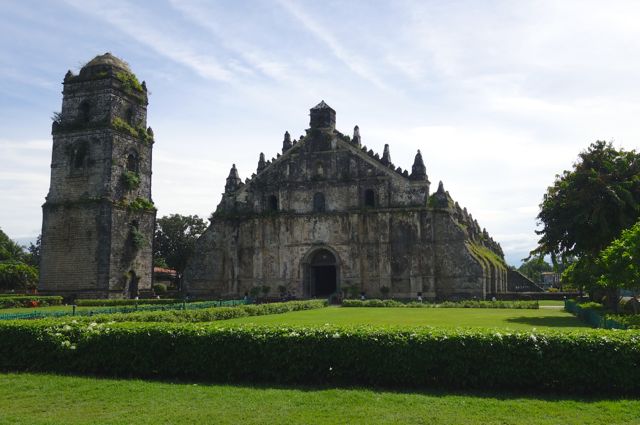
    Back in Paoay City we visit the crown jewel of Philippine churches, known locally as San Augustin or simply Paoay Church. It is a UNESCO World Heritage Site and a National Historic landmark. This Baroque structure, built in 1710, has survived its share of natural disasters (earthquakes and typhoons), as well as man-made ones (numerous wars). The bell tower, made of coral stone, is especially impressive when viewed up close.
    [/et_pb_text][et_pb_image src=”https://journeyswithstephen.com/wp-content/uploads/2016/12/Vigan-City-Philippines-horse-carriage.jpg” alt=”Vigan City Philippines horse carriage” title_text=”Vigan City Philippines horse carriage” align_tablet=”center” align_last_edited=”on|desktop” admin_label=”Vigan City Philippines horse carriage” _builder_version=”4.16″ use_border_color=”off” border_color=”#ffffff” border_style=”solid” animation=”off” sticky=”off” always_center_on_mobile=”on” global_colors_info=”{}” align_phone=”center”][/et_pb_image][et_pb_text admin_label=”Text” _builder_version=”4.16″ background_size=”initial” background_position=”top_left” background_repeat=”repeat” use_border_color=”off” border_color=”#ffffff” border_style=”solid” global_colors_info=”{}”]

    Vigan City

    We end our journey with a 2-hour drive south to Vigan City. One glance at Vigan City and you would not believe you are in Southeast Asia. This 16th century city is the best-preserved example of a Spanish colonial town in Asia, which has earned it the status of UNESCO World Heritage Centre. Horse-drawn carriages clomping down cobblestone streets in front of rustic mansions transport the visitor to another time.

    Certainly our 5 days in Ilocos introduce us to a way of life that is far different from the tourist beaches of the south in the Philippines. This is the center of history, architecture, and culture, mixed with natural wonders. We thank the Department of Tourism, Tourism Promotions Board, for the opportunity to experience this side of the Philippines and to share it with you.
    [/et_pb_text][et_pb_code admin_label=”Code for map” _builder_version=”4.16″ saved_tabs=”all” global_colors_info=”{}”][/et_pb_code][/et_pb_column][et_pb_column type=”1_4″ _builder_version=”4.16″ custom_padding=”|||” global_colors_info=”{}” custom_padding__hover=”|||”][et_pb_text admin_label=”Text” _builder_version=”4.16″ background_size=”initial” background_position=”top_left” background_repeat=”repeat” use_border_color=”off” border_color=”#ffffff” border_style=”solid” global_colors_info=”{}”]

    What’s upscale?

    In Manila, stay at the excellent Conrad Manila. The Luna Hotel in Vigan City is an acceptable accommodation. Unfortunately, I cannot recommend the Chinese-owned Fort Ilocandia in Laoag.

    What’s budget?

    Food and lodging in the Philippines can be quite reasonable, especially in the Ilocos region.


    [/et_pb_text][et_pb_social_media_follow follow_button=”on” admin_label=”Social Media Follow” _builder_version=”4.16″ link_shape=”rounded_rectangle” saved_tabs=”all” global_colors_info=”{}”][et_pb_social_media_follow_network social_network=”instagram” url=”http://www.instagram.com/journeyswithstephen” _builder_version=”4.16″ background_color=”#517fa4″ bg_color=”#517fa4″ global_colors_info=”{}” follow_button=”on” url_new_window=”on”] Instagram [/et_pb_social_media_follow_network][et_pb_social_media_follow_network social_network=”twitter” url=”http://www.twitter.com/journeystephen” _builder_version=”4.16″ background_color=”#00aced” bg_color=”#00aced” global_colors_info=”{}” follow_button=”on” url_new_window=”on”] Twitter [/et_pb_social_media_follow_network][et_pb_social_media_follow_network social_network=”facebook” url=”http://www.facebook.com/journeyswithstephen” _builder_version=”4.16″ background_color=”#3b5998″ bg_color=”#3b5998″ global_colors_info=”{}” follow_button=”on” url_new_window=”on”] facebook [/et_pb_social_media_follow_network][/et_pb_social_media_follow][/et_pb_column][/et_pb_row][/et_pb_section]
  • Chengde Mountain Resort is China’s secret

    Chengde Mountain Resort is China’s secret

    [et_pb_section fb_built=”1″ admin_label=”section” _builder_version=”4.16″ global_colors_info=”{}”][et_pb_row admin_label=”row” _builder_version=”4.16″ background_size=”initial” background_position=”top_left” background_repeat=”repeat” global_colors_info=”{}” column_structure=”3_4,1_4″][et_pb_column type=”3_4″ _builder_version=”4.16″ custom_padding=”|||” global_colors_info=”{}” custom_padding__hover=”|||”][et_pb_text admin_label=”Text” _builder_version=”4.16″ background_size=”initial” background_position=”top_left” background_repeat=”repeat” use_border_color=”off” border_color=”#ffffff” border_style=”solid” global_colors_info=”{}”]Mention the city of Chengde to Westerners and they reply, “Oh, the place with the pandas, right?” No, that’s Chengdu. Say “Chengde Mountain Resort,” and people assume it is a new hotel complex. No, it was built in the 1700s as a summer palace for the Qing emperors.
    [/et_pb_text][et_pb_image src=”https://journeyswithstephen.com/wp-content/uploads/2016/08/Prayer-bells-Putuo-Zongcheng-Temple-Chengde-China.jpg” alt=”Prayer bells Putuo Zongcheng Temple Chengde China” title_text=”Prayer bells Putuo Zongcheng Temple Chengde China” align_tablet=”center” align_last_edited=”on|desktop” admin_label=”Prayer bells Putuo Zongcheng Temple Chengde China” _builder_version=”4.16″ use_border_color=”off” border_color=”#ffffff” border_style=”solid” animation=”off” sticky=”off” always_center_on_mobile=”on” global_colors_info=”{}” align_phone=”center”][/et_pb_image][et_pb_text admin_label=”Text” _builder_version=”4.16″ background_size=”initial” background_position=”top_left” background_repeat=”repeat” use_border_color=”off” border_color=”#ffffff” border_style=”solid” global_colors_info=”{}”]Ask someone to find Chengde on a map, and they are surprised to see it is only about 250 km (155 miles) northeast of Beijing. Yet, I travel back and forth to Beijing for nearly 10 years before I ever set foot in Chengde. Why? Because it is one of China’s well-kept secrets.
    [/et_pb_text][et_pb_image src=”https://journeyswithstephen.com/wp-content/uploads/2016/08/Outlying-temple-Chengde-China.jpg” alt=”Outlying temple Chengde China” title_text=”Outlying temple Chengde China” align_tablet=”center” align_last_edited=”on|desktop” admin_label=”Outlying temple Chengde China” _builder_version=”4.16″ use_border_color=”off” border_color=”#ffffff” border_style=”solid” animation=”off” sticky=”off” always_center_on_mobile=”on” global_colors_info=”{}” align_phone=”center”][/et_pb_image][et_pb_text admin_label=”Text” _builder_version=”4.16″ background_size=”initial” background_position=”top_left” background_repeat=”repeat” use_border_color=”off” border_color=”#ffffff” border_style=”solid” global_colors_info=”{}”]Ask savvy travelers to list China’s UNESCO World Heritage Sites, and they will quickly name The Great Wall, Temple of Heaven, terracotta warriors and many others, without knowing that Chengde’s Mountain Resort and its Outlying Temples were recognized decades ago.

    Chengde gets so little respect that spell-check keeps telling me I have simply spelled Chengdu wrong. It is time for that to change. Starting here. So what are the rock stars of the Chengde (Hebei Province) region?
    [/et_pb_text][et_pb_image src=”https://journeyswithstephen.com/wp-content/uploads/2016/08/Chengde-Mountain-Resort-lake-pavilions-China.jpg” alt=”Chengde Mountain Resort lake pavilions China” title_text=”Chengde Mountain Resort lake pavilions China” align_tablet=”center” align_last_edited=”on|desktop” admin_label=”Chengde Mountain Resort lake pavilions China” _builder_version=”4.16″ use_border_color=”off” border_color=”#ffffff” border_style=”solid” animation=”off” sticky=”off” always_center_on_mobile=”on” global_colors_info=”{}” align_phone=”center”][/et_pb_image][et_pb_text admin_label=”Text” _builder_version=”4.16″ background_size=”initial” background_position=”top_left” background_repeat=”repeat” use_border_color=”off” border_color=”#ffffff” border_style=”solid” global_colors_info=”{}”]

    Chengde Mountain Resort

    This area is the largest imperial palace-garden and temple in all of China. Yes, there is the Summer Palace on the outskirts of Beijing, but this resort was built 300 years ago to escape the Beijing heat and provide a hunting grounds. Emperors of the Qing dynasty not only used the resort as a retreat, but also received diplomats from foreign countries here.
    [/et_pb_text][et_pb_image src=”https://journeyswithstephen.com/wp-content/uploads/2016/08/Chengde-Mountain-Resort-lake-China.jpg” alt=”Chengde Mountain Resort lake China” title_text=”Chengde Mountain Resort lake China” align_tablet=”center” align_last_edited=”on|desktop” admin_label=”Chengde Mountain Resort lake China” _builder_version=”4.16″ use_border_color=”off” border_color=”#ffffff” border_style=”solid” animation=”off” sticky=”off” always_center_on_mobile=”on” global_colors_info=”{}” align_phone=”center”][/et_pb_image][et_pb_text admin_label=”Text” _builder_version=”4.16″ background_size=”initial” background_position=”top_left” background_repeat=”repeat” use_border_color=”off” border_color=”#ffffff” border_style=”solid” global_colors_info=”{}”]The resort contains palace, lake, plain and mountain areas. The pavilions that surround the eight lakes are quite picturesque. The lakes freeze in the winter for ice skating, but this region is best visited during the warmer months of May through October. Allow a few hours to stroll through the considerable grounds.
    [/et_pb_text][et_pb_image src=”https://journeyswithstephen.com/wp-content/uploads/2016/08/Putuo-Zongcheng-temple-prayer-flags-Chengde-China.jpg” alt=”Putuo Zongcheng temple prayer flags Chengde China” title_text=”Putuo Zongcheng temple prayer flags Chengde China” align_tablet=”center” align_last_edited=”on|desktop” admin_label=”Putuo Zongcheng temple prayer flags Chengde China” _builder_version=”4.16″ use_border_color=”off” border_color=”#ffffff” border_style=”solid” animation=”off” sticky=”off” always_center_on_mobile=”on” global_colors_info=”{}” align_phone=”center”][/et_pb_image][et_pb_text admin_label=”Text” _builder_version=”4.16″ background_size=”initial” background_position=”top_left” background_repeat=”repeat” use_border_color=”off” border_color=”#ffffff” border_style=”solid” global_colors_info=”{}”]

    Outlying Temples

    Some of the 12 outlying temples recognized by UNESCO were built in the styles of ethnic minorities. This was done to foster relations with China’s many minorities.

    Most notable is Putuo Zongchengzhi, modeled after the Tibetan Potala Palace in Lhasa. It is the largest temple, covering some 220,000 square kilometers. Its Tibetan style is immediately noticeable.
    [/et_pb_text][et_pb_image src=”https://journeyswithstephen.com/wp-content/uploads/2016/08/Putuo-Zongcheng-Temple-Chengde-China.jpg” alt=”Putuo Zongcheng Temple Chengde China” title_text=”Putuo Zongcheng Temple Chengde China” align_tablet=”center” align_last_edited=”on|desktop” admin_label=”Putuo Zongcheng Temple Chengde China” _builder_version=”4.16″ use_border_color=”off” border_color=”#ffffff” border_style=”solid” animation=”off” sticky=”off” always_center_on_mobile=”on” global_colors_info=”{}” align_phone=”center”][/et_pb_image][et_pb_text admin_label=”Text” _builder_version=”4.16″ background_size=”initial” background_position=”top_left” background_repeat=”repeat” use_border_color=”off” border_color=”#ffffff” border_style=”solid” global_colors_info=”{}”]Lifan Yuan, a department to handle Mongolian and Tibetan affairs, among others, constructed eight of the temples. So you may hear the name “8 Outlying Temples” as well. Puning Temple is probably the second most visited of the temples. These amazing temples would be on everyone’s must-see list were they in a more-visited city.
    [/et_pb_text][et_pb_image src=”https://journeyswithstephen.com/wp-content/uploads/2016/08/Four-Harmonious-Friends-Chengde-China.jpg” alt=”Four Harmonious Friends Chengde China” title_text=”Four Harmonious Friends Chengde China” align_tablet=”center” align_last_edited=”on|desktop” admin_label=”Four Harmonious Friends Chengde China” _builder_version=”4.16″ use_border_color=”off” border_color=”#ffffff” border_style=”solid” animation=”off” sticky=”off” always_center_on_mobile=”on” global_colors_info=”{}” align_phone=”center”][/et_pb_image][et_pb_text admin_label=”Text” _builder_version=”4.16″ background_size=”initial” background_position=”top_left” background_repeat=”repeat” use_border_color=”off” border_color=”#ffffff” border_style=”solid” global_colors_info=”{}”]One of my favorite spots is the representation of the “Four Harmonious Friends” from Buddhist mythology. There are many accounts as to the meaning of the fable of these four animals and the nearby fruit tree. In one, they were deciding who was the oldest and therefore, wisest. The elephant remembered it as a tall tree. The monkey remembered climbing a young tree to get its fruit. The rabbit remembered munching on its leaves and fertilizing it as a sapling. But the bird remembered spitting out the seed from which the tree sprouted, so he was deemed the oldest and wisest. Still, they all needed each other, as various stories of the fable relate.
    [/et_pb_text][et_pb_image src=”https://journeyswithstephen.com/wp-content/uploads/2016/08/Puning-Temple-Chengde-China.jpg” alt=”Puning Temple Chengde China” title_text=”Puning Temple Chengde China” align_tablet=”center” align_last_edited=”on|desktop” admin_label=”Puning Temple Chengde China” _builder_version=”4.16″ use_border_color=”off” border_color=”#ffffff” border_style=”solid” animation=”off” sticky=”off” always_center_on_mobile=”on” global_colors_info=”{}” align_phone=”center”][/et_pb_image][et_pb_text admin_label=”Text” _builder_version=”4.16″ background_size=”initial” background_position=”top_left” background_repeat=”repeat” use_border_color=”off” border_color=”#ffffff” border_style=”solid” global_colors_info=”{}”]You should allow at least a half-day to appreciate Putuo Zongchengzhi and Puning. You can tell from the photographs there is much to be explored and embraced.

    The city of Chengde

    Chengde may be home to the Mountain Resort and Outlying Temples from the 1700s, but it is also a fast-growing, modern metropolis, like so many other Chinese cities. In 2016, it is reached primarily by a modern superhighway, about 3+ hours by bus or car from Beijing.
    [/et_pb_text][et_pb_image src=”https://journeyswithstephen.com/wp-content/uploads/2016/08/Guest-room-Jiahe-International-Hotel-Chengde-China.jpg” alt=”Guest room Jiahe International Hotel Chengde China” title_text=”Guest room Jiahe International Hotel Chengde China” align_tablet=”center” align_last_edited=”on|desktop” admin_label=”Guest room Jiahe International Hotel Chengde China” _builder_version=”4.16″ use_border_color=”off” border_color=”#ffffff” border_style=”solid” animation=”off” sticky=”off” always_center_on_mobile=”on” global_colors_info=”{}” align_phone=”center”][/et_pb_image][et_pb_text admin_label=”Text” _builder_version=”4.16″ background_size=”initial” background_position=”top_left” background_repeat=”repeat” use_border_color=”off” border_color=”#ffffff” border_style=”solid” global_colors_info=”{}”]We stay at the new Jiahe International Hotel, which is upscale on a budget. First-class rooms can be booked for less than US$100. Like many places in China, the facility is good-looking, but the service is still in a learning stage. We are there joining a group of about 200 Americans, but at the buffet breakfast the staff sets up one small coffeemaker for all 200 people. Few of us can pronounce “Jiahe” either, making it a curious name for an “international” hotel.
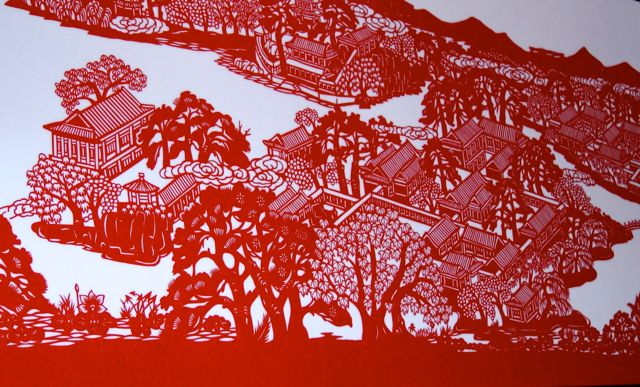
    [/et_pb_text][et_pb_image src=”https://journeyswithstephen.com/wp-content/uploads/2016/08/Junfeng-Paper-Cutting-Chengde-China.jpg” alt=”Junfeng Paper Cutting Chengde China” title_text=”Junfeng Paper Cutting Chengde China” align_tablet=”center” align_last_edited=”on|desktop” admin_label=”Junfeng Paper Cutting Chengde China” _builder_version=”4.16″ use_border_color=”off” border_color=”#ffffff” border_style=”solid” animation=”off” sticky=”off” always_center_on_mobile=”on” global_colors_info=”{}” align_phone=”center”][/et_pb_image][et_pb_text admin_label=”Text” _builder_version=”4.16″ background_size=”initial” background_position=”top_left” background_repeat=”repeat” use_border_color=”off” border_color=”#ffffff” border_style=”solid” global_colors_info=”{}”]One highlight of our city visit is the Junfeng Paper Cutting shop. We get a demonstration of the art of Chinese paper cutting, which dates back to the 6th century. This is the shop of Shi Junfeng, and her works for purchase here are some of the finest examples I have seen anywhere.
    [/et_pb_text][et_pb_video _builder_version=”4.21.2″ _module_preset=”default” src=”https://youtu.be/bIT0sWMV0EU” admin_label=”Performance at Jinshanling video” hover_enabled=”0″ sticky_enabled=”0″][/et_pb_video][et_pb_text admin_label=”Text” _builder_version=”4.16″ background_size=”initial” background_position=”top_left” background_repeat=”repeat” use_border_color=”off” border_color=”#ffffff” border_style=”solid” global_colors_info=”{}”]

    Gateway to Jinshanling Great Wall

    Just over an hour southwest from Chengde (and on the way to Beijing) lies the Jinshanling section of the Great Wall of China. It is one of my favorite sections – well preserved, part restored, part wild. It’s generally uncrowded, due to being more remote from Beijing than Badaling, Mutianyu, etc. And people of all ages can hike this section.

    You can learn more about this region in my post about U.S.-China Tourism. Now that the secret is out, does Chengde sound like a place you would want to visit? Feel free to comment at the bottom of this post.
    [/et_pb_text][et_pb_code admin_label=”Code for map” _builder_version=”4.21.2″ hover_enabled=”0″ saved_tabs=”all” global_colors_info=”{}” sticky_enabled=”0″][/et_pb_code][/et_pb_column][et_pb_column type=”1_4″ _builder_version=”4.16″ custom_padding=”|||” global_colors_info=”{}” custom_padding__hover=”|||”][et_pb_text admin_label=”Text” _builder_version=”4.16″ background_size=”initial” background_position=”top_left” background_repeat=”repeat” use_border_color=”off” border_color=”#ffffff” border_style=”solid” global_colors_info=”{}”]

    What’s upscale?

    Original large Chinese paper cuts are exquisite unique gifts for friends and family – I suggest lunar birth animals. They are also lightweight and easy to transport.

    What’s budget?

    Admission fees to these UNESCO attractions are reasonable, between US$10-20 and Jinshanling Great Wall tickets are even less.


    [/et_pb_text][et_pb_social_media_follow follow_button=”on” admin_label=”Social Media Follow” _builder_version=”4.16″ link_shape=”rounded_rectangle” saved_tabs=”all” global_colors_info=”{}”][et_pb_social_media_follow_network social_network=”instagram” url=”http://www.instagram.com/journeyswithstephen” _builder_version=”4.16″ background_color=”#517fa4″ bg_color=”#517fa4″ global_colors_info=”{}” follow_button=”on” url_new_window=”on”] Instagram [/et_pb_social_media_follow_network][et_pb_social_media_follow_network social_network=”twitter” url=”http://www.twitter.com/journeystephen” _builder_version=”4.16″ background_color=”#00aced” bg_color=”#00aced” global_colors_info=”{}” follow_button=”on” url_new_window=”on”] Twitter [/et_pb_social_media_follow_network][et_pb_social_media_follow_network social_network=”facebook” url=”http://www.facebook.com/journeyswithstephen” _builder_version=”4.16″ background_color=”#3b5998″ bg_color=”#3b5998″ global_colors_info=”{}” follow_button=”on” url_new_window=”on”] facebook [/et_pb_social_media_follow_network][/et_pb_social_media_follow][/et_pb_column][/et_pb_row][/et_pb_section]

  • China – U.S. tourism ready to soar

    China – U.S. tourism ready to soar

    [et_pb_section fb_built=”1″ admin_label=”section” _builder_version=”4.16″ global_colors_info=”{}”][et_pb_row column_structure=”3_4,1_4″ admin_label=”row” _builder_version=”4.16″ background_size=”initial” background_position=”top_left” background_repeat=”repeat” global_colors_info=”{}”][et_pb_column type=”3_4″ _builder_version=”4.16″ custom_padding=”|||” global_colors_info=”{}” custom_padding__hover=”|||”][et_pb_text admin_label=”Text” _builder_version=”4.16″ background_size=”initial” background_position=”top_left” background_repeat=”repeat” use_border_color=”off” border_color=”#ffffff” border_style=”solid” global_colors_info=”{}”]Those L.V. and Michael Kors handbags going home with Chinese tourists every year represent more than half the exports the U.S. sends to China. Yes, 57% of U.S. exports to China are the money spent by the 2.5 million Chinese visitors. And nearly as many Americans are touring China each year.

    It’s no surprise that Presidents Xi and Obama declared 2016 to be the Year of China-U.S. Tourism. I was fortunate to be invited by the Chinese National Tourism Administration to the ceremonies that kicked off the year in China. The biggest event was held at the Jinshanling section of The Great Wall in late March, a few weeks after the beginning of the Year of the Monkey.
    [/et_pb_text][et_pb_image src=”https://journeyswithstephen.com/wp-content/uploads/2016/04/Jinshanling-tourism-launch-ceremony.jpg” alt=”Jinshanling tourism launch ceremony” title_text=”Jinshanling tourism launch ceremony” align_tablet=”center” align_phone=”center” align_last_edited=”on|desktop” admin_label=”Jinshanling tourism launch ceremony” _builder_version=”4.16″ use_border_color=”off” border_color=”#ffffff” border_style=”solid” animation=”off” sticky=”off” always_center_on_mobile=”on” global_colors_info=”{}”] [/et_pb_image][et_pb_text admin_label=”Text” _builder_version=”4.16″ background_size=”initial” background_position=”top_left” background_repeat=”repeat” use_border_color=”off” border_color=”#ffffff” border_style=”solid” global_colors_info=”{}”]A launch ceremony entitled “1,000 Americans visiting The Great Wall” featured hundreds of local dancers in traditional costumes, speeches by officials of both countries and even a warm-up routine from 2014 Olympic ice dancing gold medalists, Americans Meryl Davis and Charlie White.
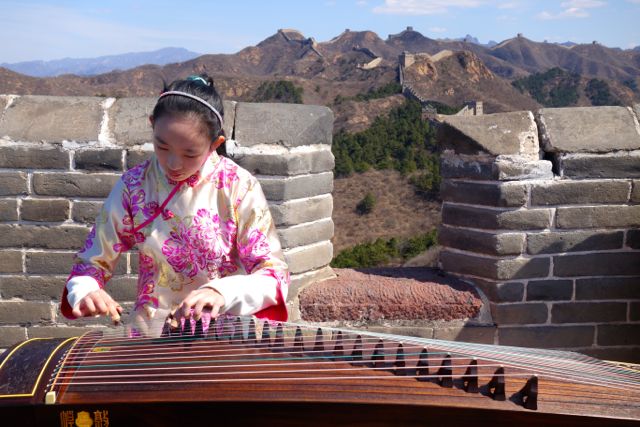
    [/et_pb_text][et_pb_image src=”https://journeyswithstephen.com/wp-content/uploads/2016/04/Stephen-Henson-Meryl-Davis-Charlie-White.jpg” alt=”Stephen Henson Meryl Davis Charlie White” title_text=”Stephen Henson Meryl Davis Charlie White” align_tablet=”center” align_phone=”center” align_last_edited=”on|desktop” admin_label=”Stephen Henson Meryl Davis Charlie White” _builder_version=”4.16″ use_border_color=”off” border_color=”#ffffff” border_style=”solid” animation=”off” sticky=”off” always_center_on_mobile=”on” global_colors_info=”{}”] [/et_pb_image][et_pb_text admin_label=”Text” _builder_version=”4.16″ background_size=”initial” background_position=”top_left” background_repeat=”repeat” use_border_color=”off” border_color=”#ffffff” border_style=”solid” global_colors_info=”{}”]I have climbed various sections of the Great Wall dozens of times over the years, but this venue was special. The restored Jinshanling section in Hebei province is spectacular, as was the blue-sky day and the costumed locals playing traditional instruments high above the countryside. What a way to kick off a year of tourism.
    [/et_pb_text][et_pb_video src=”https://youtu.be/ig5FyDcvOzg” admin_label=”Jinshanling string instrument video” _builder_version=”4.21.2″ _module_preset=”default” global_colors_info=”{}”][/et_pb_video][et_pb_text admin_label=”Text” _builder_version=”4.16″ background_size=”initial” background_position=”top_left” background_repeat=”repeat” use_border_color=”off” border_color=”#ffffff” border_style=”solid” global_colors_info=”{}”]Only 6% of Chinese have passports and only 3% of those people visited the U.S. last year. Yet they spent about $24 billion. With a growing middle class anxious to travel abroad, it’s no wonder China is expected to become the largest source of inbound tourism for the U.S. within the next few years. And appropo that visas between the two countries now carry a 10-year term!

    For a decade I have been hosting Americans who are seeking a custom travel experience in China. On this most recent visit, courtesy of the CNTA and Air China, I discovered even more places to take my fellow Americans.
    [/et_pb_text][et_pb_image src=”https://journeyswithstephen.com/wp-content/uploads/2016/04/Chengde-China-temple-travel-group.jpg” alt=”Chengde China temple travel group” title_text=”Chengde China temple travel group” align_tablet=”center” align_phone=”center” align_last_edited=”on|desktop” admin_label=”Chengde China temple travel group” _builder_version=”4.16″ use_border_color=”off” border_color=”#ffffff” border_style=”solid” animation=”off” sticky=”off” always_center_on_mobile=”on” global_colors_info=”{}”] [/et_pb_image][et_pb_text admin_label=”Text” _builder_version=”4.16″ background_size=”initial” background_position=”top_left” background_repeat=”repeat” use_border_color=”off” border_color=”#ffffff” border_style=”solid” global_colors_info=”{}”]I was part of a group of just 15 interesting people in the travel business from cities across the U.S. We spent a week together primarily in Beijing and Chengde, along with other Hebei cities. I had never been to where The Great Wall actually begins at the Bohai Sea, called Laolongtou or “Old Dragon’s Head.” If you imagine the shape of the Wall as it sprawls across northern China as a giant dragon, then this would be its head.
    [/et_pb_text][et_pb_image src=”https://journeyswithstephen.com/wp-content/uploads/2016/04/China-Great-Wall-Laolongtou.jpg” alt=”China Great Wall Laolongtou” title_text=”China Great Wall Laolongtou” align_tablet=”center” align_phone=”center” align_last_edited=”on|desktop” admin_label=”China Great Wall Laolongtou” _builder_version=”4.16″ use_border_color=”off” border_color=”#ffffff” border_style=”solid” animation=”off” sticky=”off” always_center_on_mobile=”on” global_colors_info=”{}”] [/et_pb_image][et_pb_text admin_label=”Text” _builder_version=”4.16″ background_size=”initial” background_position=”top_left” background_repeat=”repeat” use_border_color=”off” border_color=”#ffffff” border_style=”solid” global_colors_info=”{}”]Nearby is another famous section of The Great Wall, Shanhaiguan, which translates to mountain-sea-pass. Built in 1381 during the Ming Dynasty, this was one of the most significant and heavily fortified passes in China. It is also known as Tianxia Diyi Guan or “First Pass Under Heaven.”
    [/et_pb_text][et_pb_image src=”https://journeyswithstephen.com/wp-content/uploads/2016/04/Shanhaiguan-Great-Wall-China.jpg” alt=”Shanhaiguan Great Wall China” title_text=”Shanhaiguan Great Wall China” align_tablet=”center” align_phone=”center” align_last_edited=”on|desktop” admin_label=”Shanhaiguan Great Wall China” _builder_version=”4.16″ use_border_color=”off” border_color=”#ffffff” border_style=”solid” animation=”off” sticky=”off” always_center_on_mobile=”on” global_colors_info=”{}”] [/et_pb_image][et_pb_text admin_label=”Text” _builder_version=”4.16″ background_size=”initial” background_position=”top_left” background_repeat=”repeat” use_border_color=”off” border_color=”#ffffff” border_style=”solid” global_colors_info=”{}”]I think it is fine for Westerners on a first trip to China to confine themselves to a Great Wall visit near Beijing, probably Mutianyu, but there are some amazing sections to be explored on subsequent visits! Read more about those in a future post.

    Surprisingly, this was also my first visit to Chengde, despite its close proximity to Beijing, only about 3 hours away by bus on a very good highway. In a few years, given China’s propensity for building out infrastructure, there will also be both high-speed rail and an airport.
    [/et_pb_text][et_pb_image src=”https://journeyswithstephen.com/wp-content/uploads/2016/04/Chengde-China-mayor-secretary-Stephen-Henson.jpg” alt=”Chengde China mayor-secretary-Stephen Henson” title_text=”Chengde China mayor-secretary-Stephen Henson” align_tablet=”center” align_phone=”center” align_last_edited=”on|desktop” admin_label=”Chengde China mayor-secretary-Stephen Henson” _builder_version=”4.16″ use_border_color=”off” border_color=”#ffffff” border_style=”solid” animation=”off” sticky=”off” always_center_on_mobile=”on” global_colors_info=”{}”] [/et_pb_image][et_pb_text admin_label=”Text” _builder_version=”4.16″ background_size=”initial” background_position=”top_left” background_repeat=”repeat” use_border_color=”off” border_color=”#ffffff” border_style=”solid” global_colors_info=”{}”]I was fortunate to speak with the mayor and the party secretary of Chengde, as well as many other officials during our days (and many banquets and baijiu toasts) there. At the heart is the Chengde Mountain Resort, an expansive complex built during the 1700s as the Qing Dynasty’s Summer Palace. This UNESCO World Heritage Site offered a reprieve from the heat of Beijing.
    [/et_pb_text][et_pb_image src=”https://journeyswithstephen.com/wp-content/uploads/2016/04/China-Chengde-Mountain-Resort.jpg” alt=”China Chengde Mountain Resort” title_text=”China Chengde Mountain Resort” align_tablet=”center” align_phone=”center” align_last_edited=”on|desktop” admin_label=”China Chengde Mountain Resort” _builder_version=”4.16″ use_border_color=”off” border_color=”#ffffff” border_style=”solid” animation=”off” sticky=”off” always_center_on_mobile=”on” global_colors_info=”{}”] [/et_pb_image][et_pb_text admin_label=”Text” _builder_version=”4.16″ background_size=”initial” background_position=”top_left” background_repeat=”repeat” use_border_color=”off” border_color=”#ffffff” border_style=”solid” global_colors_info=”{}”]As if the Resort weren’t enough reason to visit Chengde, the Outlying Temples provide the clincher. Together, they are largest imperial palace-garden and temple complex in China. I will devote another post entirely to this impressive and historic site.

    As we like to say, China is a big country, with a great deal to experience. The same can be said for the United States. I recently hosted Chinese travelers to places as diverse as Las Vegas and The Grand Canyon (40% of Chinese tourists to the U.S. visit a national park). Despite some of the challenges of language I write about here, travel embraces understanding and brings our cultures closer together. The Year of China-U.S. Tourism supports these efforts.
    [/et_pb_text][/et_pb_column][et_pb_column type=”1_4″ _builder_version=”4.16″ custom_padding=”|||” global_colors_info=”{}” custom_padding__hover=”|||”][et_pb_text admin_label=”Text” _builder_version=”4.16″ background_size=”initial” background_position=”top_left” background_repeat=”repeat” use_border_color=”off” border_color=”#ffffff” border_style=”solid” global_colors_info=”{}”]

    What’s upscale?

    I always try to stay at the Westin Financial Street in Beijing, with a hotel tower and executive residence tower and the finest staff.

    The Jiahe International Hotel in Chengde is a Chinese hotel offering a true 4-star experience (except for coffee).

    What’s budget?

    Visits to The Great Wall, the Chengde Mountain Resort and most other Chinese landmarks are quite reasonably priced to attract a mass audience.


    [/et_pb_text][et_pb_social_media_follow follow_button=”on” admin_label=”Social Media Follow” _builder_version=”4.16″ link_shape=”rounded_rectangle” saved_tabs=”all” global_colors_info=”{}”][et_pb_social_media_follow_network social_network=”instagram” url=”http://www.instagram.com/journeyswithstephen” _builder_version=”4.16″ background_color=”#517fa4″ bg_color=”#517fa4″ global_colors_info=”{}” follow_button=”on” url_new_window=”on”] Instagram [/et_pb_social_media_follow_network][et_pb_social_media_follow_network social_network=”twitter” url=”http://www.twitter.com/journeystephen” _builder_version=”4.16″ background_color=”#00aced” bg_color=”#00aced” global_colors_info=”{}” follow_button=”on” url_new_window=”on”] Twitter [/et_pb_social_media_follow_network][et_pb_social_media_follow_network social_network=”facebook” url=”http://www.facebook.com/journeyswithstephen” _builder_version=”4.16″ background_color=”#3b5998″ bg_color=”#3b5998″ global_colors_info=”{}” follow_button=”on” url_new_window=”on”] facebook [/et_pb_social_media_follow_network][/et_pb_social_media_follow][/et_pb_column][/et_pb_row][/et_pb_section]