

8 reasons to cruise upscale
I have never been in love with cruises. I like to figure out itineraries, ride trains, explore on my own. Besides, aren’t cruises just for old people and honeymooners? I finally take the plunge on a Baltic cruise and provide 8 reasons to cruise upscale on a budget.
I am attending a conference in Stockholm and thought it would be a cool idea to take the family on a Scandinavian trip. So I start charting our course. We will take a train from Stockholm to Oslo. Wait, that’s going to take most of the day. It’s the same with getting to Copenhagen. And there’s no good way to get to Finland except by boat. Plus, hotels are pricey. This is getting complicated, time-consuming and expensive.
1. Wake up to a different country every morning
Some itineraries are simply tailor-made for cruising. In this case, with a cruise ship we would have all day to explore a city and wake up the next morning in a new country. We will see Sweden, Finland, Russia, Estonia and Latvia, all in a week. No hassles with airports or connecting trains or traffic jams. This is supposed to be fun, right?
The same concept applies to the Caribbean, where I took a Disney cruise years ago. Awake each morning to a different island. Cruising is a good way to get a taste of a new destination to determine if you want to return or not.
2. See lands from a vantage point only offered by sea
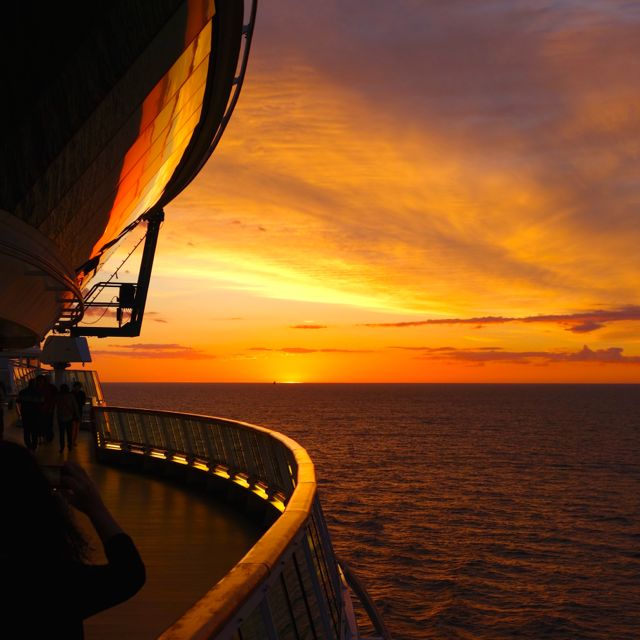
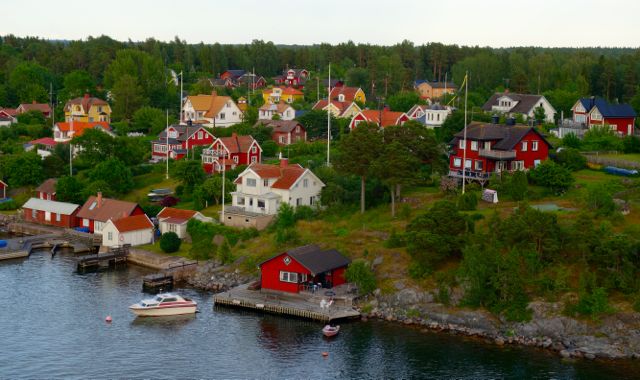
It takes us three hours to reach the Baltic Sea as we cruise from Stockholm through the beautiful Swedish archipelago, topped by a spectacular sunset. And we get bonus views post-sunrise on the return leg. A ship is simply the best way to see this amazing scenery. The same could be said about the Alaskan coast, the Rhine River and many other lands, now becoming popular cruise vacation journeys.
3. Unpack once
I’m not revealing anything new here, but it bears repeating. Even though we pack light (a carry-on and a backpack each), there is something to be said for putting everything away in drawers at the beginning of the trip and not rummaging through a suitcase. Also nice to not have to pack and unpack every day with each new location.
4. Easy to plan a complex itinerary
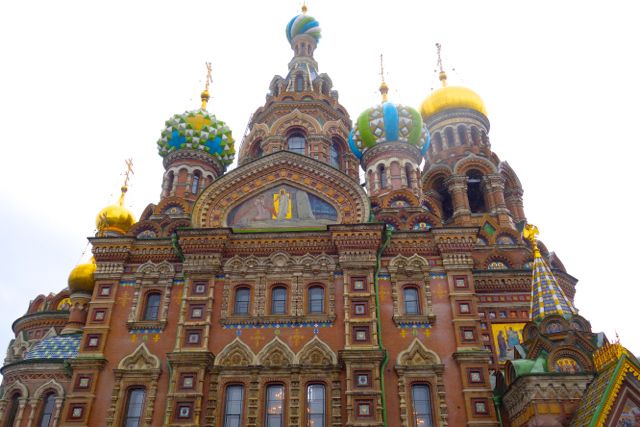
Thinking of going to Russia? It’s already one of my cruise stops. But Americans need a visa that isn’t a simple process. Not to worry. Whether you take an excursion through the cruise ship or an independent one, the Russian visa is taken care of as a temporary cruise ship visitor. In our case, we select a 2-day SPB Tour, a company that specializes in custom tours for smaller groups (15 of us) at a much lower price.

5. No, you won’t be bored onboard
I am one of those people who can only lie on a beach or at a pool for about an hour. I get bored easily. What am I suppose to do with a “day at sea?” It turns out that there are plenty of diversions for all ages and types of people.
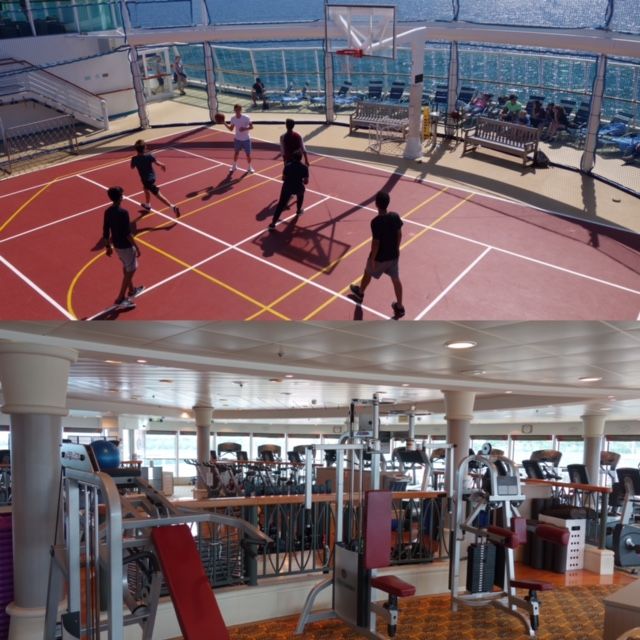
No, I am not trying the rock-climbing wall, and I don’t gamble. My daughter and I do manage to get in a round of miniature golf. Then she goes off for a pedicure at the spa. I catch a live oldies rock ‘n’ roll concert, while a movie plays at the theater next door. Want something more physical? There’s a pick-up game of basketball on the opposite end of the ship from the large fitness center.
We barely scratch the surface of non-stop activities. I have brought a book, but rarely have time to read more than a few pages. I’m good with a day at sea, though I’m not sure about two or three.
6. Don’t be afraid to ask
In the main dining room my spouse happens to mention to our waiter that she really likes shrimp, except for those darn shells. He proceeds to bring her a double order of shrimp and then removes each one from its shell for her.
We order sparkling water the first night, and it magically arrives at the table each night thereafter. My daughter enjoys the pasta, but not the sauce, so they immediately come up with a sauce to her liking.

I say that I can’t wait to try the key lime pie tonight, so our waiter brings me a double order. The moral of the story is don’t be afraid to ask for what would please you.
7. One size does not fit all . . . lots of cruise options
I am pleasantly surprised to see a lot of diversity in the passengers on our Baltic cruise. Young and old. Singles, couples, and families. North Americans, Europeans, Asians. What we all have in common is an eagerness to learn more about this region of the world.
The options are now limitless. You can cruise on a 12-passenger boat through France. You can cruise on a ship with more than 5,000 guests and 2,000 crew members. You can cruise through a dozen ports in Southeast Asia or sail around the world.
8. Fits upscale on a budget
All those options play right into our goal of being upscale on a budget. Work with a travel agent and check out sites like Cruise Critic for good deals.
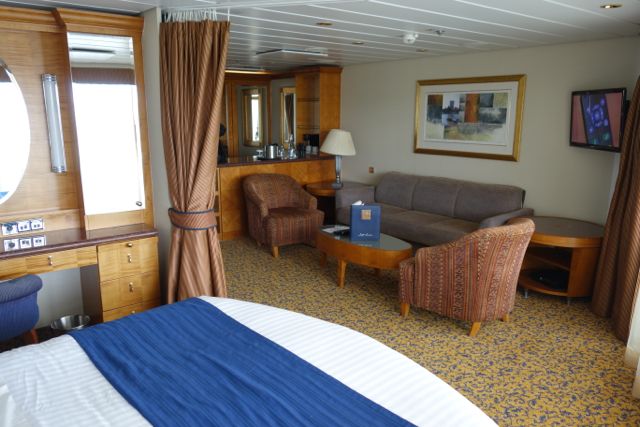
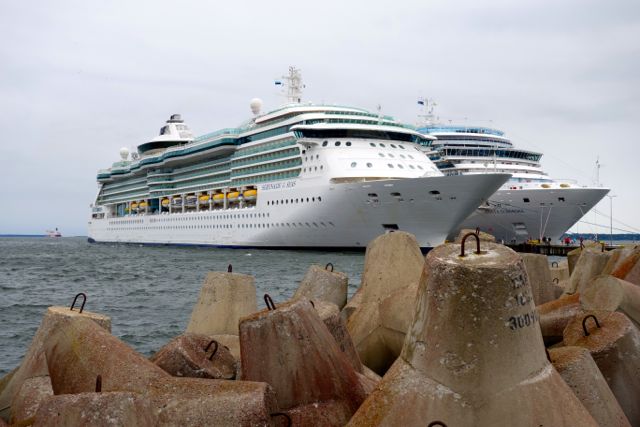
In our case Royal Caribbean’s Serenade of the Seas has a schedule that fits our plans well, ending just a few days before the start of my TBEX travel conference. It’s considered to be a mid-sized ship, with fewer than 2,000 guests and about 850 crew. I decide to go upscale, securing a Grand Suite with balcony on the “bump,” mid-ship. We are on the highest passenger deck 10.
The Grand Suite comes with amenities that make all the difference over the course of our journey. We have access to a Concierge Club, with free drinks and hors d’oeuvres. We proceed to consume hundreds of dollars worth of champagne and exotic drinks in this intimate atmosphere. We have breakfast each day in one of the specialty restaurants. We get early boarding and late disembarking. The list of other amenities is too long to list here.
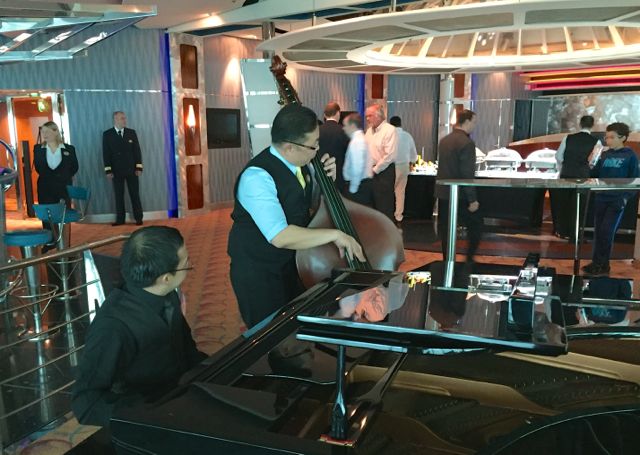
Best of all, we have our own friendly private concierge, who handles everything from reservations to general advice. He even plays bass at a private sushi party just for suite guests to meet the ship’s officers.
In a nutshell, you don’t have to choose a luxury liner to get a near-luxury experience.
Going upscale pays numerous dividends, but we are still on a budget. We get senior discounts and my daughter pays just 20% of the price. Significant onboard credits help with those unplanned expenses.
My only complaint on the whole voyage is abysmal Internet service, even when paying for the premium version.
All in all, the reasons for upscale cruising have never been more obvious. I guess I’m now a cruiser. What about you? Do you cruise? Do you have any tips and advice? Feel free to comment at the bottom of this post.
What’s upscale?
Reserving a Grand Suite on Royal Caribbean’s Serenade of the Seas provides a spacious room with balcony and a host of amenities, including a private concierge and free drinks in the private lounge.
Using SPB Tours in Russia was convenient, smaller group, customized.
What’s budget?
You can still get a good deal and be a big fish in the pond without having to book a luxury vessel.
8 ways to save on rental cars
I know Chicago can be an expensive city, but the rental car quotes seemed really high, even though I had used Costco’s Low Price Finder to compare four brands. Then I decided to add an extra day to my rental period. Voila! The total price actually went down by $100.
You have to work at it, but there are numerous ways to save on rental cars. I will show you 8 ways to keep your budget in check, so you can splurge elsewhere. Please note this post is written for car renting in the U.S. only. Some of my tips may apply internationally, but I haven’t tested them outside the U.S.

1. Use the right credit card for insurance
I think most people know by now not to check the boxes for insurance coverage. First, find out what your personal auto insurance covers. It is probably everything, after a deductable. Second, use a credit card that provides even more coverage. I now exclusively use my Chase Sapphire Preferred Visa card because of the free rental car insurance it provides.The card covers the entire loss, damage or theft of your car rental without reporting it to your insurance company, It’s safe to say I have saved thousands of dollars over the years by not checking those little boxes on the rental form.
2. Use a comparison tool
You can save both time and money by using an online tool that compares various car rental brands. My favorite is the Costco Low Price Finder, which applies all the discounts it knows about and then shows you all the cars from several brands. At the time of this writing, they featured Alamo, Avis, Budget and Enterprise. If you belong to one of those services, simply enter your ID number, and the reservation goes into their system too. I do this to ensure Budget’s Fastbreak service, where I can skip the rental counter.
3. Play with different days and lengths
It helps to know a little about your rental location. Chicago and San Francisco need lots of cars for business travelers during the week, but those cars sit idle on weekends. Therefore, a weekend rate at SFO or ORD can be significantly lower than weekday. Play with the booking tool to see when weekend rates apply. Arriving Thursday morning? You may benefit by picking up the car after noon.
In my example above, I needed a car in Chicago for 5 days. When I played a bit, adding a sixth day, it recalculated into a weekly rate, actually lowering the price. As there was no penalty for an early return (they can rent the car again), I used the vehicle for the original 5 days at the lower price.
4. Reserve far in advance then recheck
I knew I would need a rental car for a week on Maui. Because I booked the airline tickets far in advance, I decided to book the car too. However, I noticed a “featured coupon” on the Costco site was expiring before my trip and couldn’t be applied. I booked the car anyway. Then I went back a month later to discover a new eligible coupon and rebooked the car at a lower price.
I always suggest booking far in advance and then rechecking. For a one-week trip the airlines changed my flight times, arriving two hours earlier. I called the rental car company to simply arrange a pickup a little earlier. They were happy to do it because it meant recalculating my price at the latest rates – $130 more for the week! Needless to say, I declined, left the reservation alone and picked the car up early anyway – no questions asked.
Another lesson there. When in doubt, negotiate with the people at the rental counter. They know what the inventory looks like. Your car may be ready early. Or maybe you can score an upgrade, because they have a glut of vehicles one class higher than what you rented. They have more latitude than a phone agent.
5. Try a service that rents by the hour
Sometimes you fly into a major city for a business meeting the next day, then fly home. Rental car companies love you, having no qualms about charging over $100 for a 24-hour weekday rental. Your hotel loves you too, easily tacking on $60 to $80 for overnight parking. But you can win this game by using a car-sharing service that rents by the hour.
I have used Zipcar many times in San Francisco. Cars are conveniently placed all over the city. I use BART (the train) to get into the city from the airport ($18 round trip) and then rent a nice Prius to drive to my meeting at about $10/hour for a few hours. Total transportation cost: around $50 instead of more than $150. Please note that Zipcar does require a small annual fee to belong.
6. Investigate new, specialty providers
I usually stick with the traditional brands, but sometimes a new rental car company can be right for the traveler who is upscale on a budget. Silvercar is one that comes to mind. All of their cars are semi-luxury Audi A4s, in silver of course. They are not cheap, but come equipped with a sunroof, black leather, satellite radio and even Wi-Fi baked into the price. That makes them compare favorably with other providers’ prestige offerings. There are deals for first-time renters, and the experience is 100% online.

7. Watch out for add-ons
I have rented a minivan in San Francisco to drive clients down the Pacific Coast Highway through Big Sur to Los Angeles. Fortunately, there was no drop-off charge at LAX. Look out for that.
Sometimes the added fees can really cut into apparent savings. Take this case: Hertz.com shows a full-size car on a weekday in Chicago as $78 – already too expensive in my book. But wait, that doesn’t include an airport concession fee recovery, customer facility charge, energy surcharge, and taxes. Together they add more than $36 a day to the price! The real price is $114! (Note: at least Costco’s tool presents the total price in its calculations, not the unbundled cost. They also waive any additional driver fees if you reserve through them.)
Hertz would also like you to sign up for “convenience options.” Think $8/day for satellite radio, $14 for a child seat, and a whopping $17/day for GPS – you know, the feature that is on your phone for free. Watch out for add-ons!
8. What I personally don’t do
Everybody has an opinion about how to save money. You have read some of mine. Here is what I don’t do. I never prepay for a gas. Yes, filling up just before returning is one more thing to remember, but the savings is significant.
I don’t prepay for the vehicle. I know there is a savings, but it comes at a price. I like to be able to change my mind and cancel a reservation without a penalty. (Your mileage may vary).
I don’t often choose off-airport locations. Yes, sometimes they can be a little cheaper; but the hassle and expense of getting there and back, usually older inventory, and fewer choices make this a non-starter for me. Be careful, too of business hours. What if your plans change, and you need to stay in town for dinner, catching a later flight. But wait, that off-airport location where you rented from closed at 5:00pm. Now what?
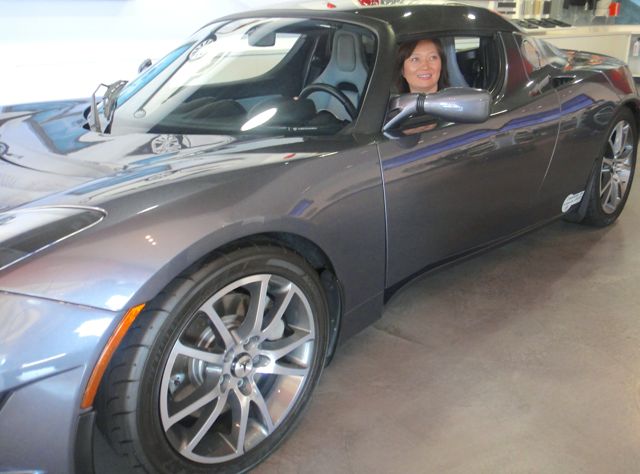
Don’t forget to splurge!
If you follow these tips you are certain to save money. Since we are upscale on a budget, we usually like to take those savings and spend them elsewhere. How about next time renting a shiny new Tesla?

Why go to a travel show?
Have you ever considered a trip to India? What about a cruise through the Mediterranean? Do you dream of going on a safari in Africa or maybe hiking to the bottom of the Grand Canyon? How would you decide? Who would you ask? Where do you even start? The answer is to attend a travel show, where hundreds of experts are gathered together to help you begin your research.
You will come home with a head full of ideas and a bag full of glossy brochures. It’s low pressure. It’s entertaining. It’s informative. It’s a day of fun!

In the U.S., my favorite is the Travel & Adventure Show. Held on a Saturday and Sunday in some major market convention centers, they are just the ticket (and tickets are cheap). In 2016, the show is in San Diego, Chicago, Dallas, Washington DC, Los Angeles (Long Beach), SF/Bay Area, and Philadelphia. A complete rundown can be found at travelshows.com.
First, this show features hundreds of exhibitors across a wide range of interests and geography, from the Taiwan Tourism Bureau to Himalayan High Treks to the Zulu Nyala Game Reserve.
Second, you can listen to keynote speakers, such as Samantha Brown, Patricia Schultz, Pauline Frommer, and Rick Steves, as they share their travel insights
Third, there are performances from cultural to culinary – dance and music groups to cooking demonstrations from notable chefs.

Fourth, there are activities for you, which range from rock climbing to zip lines to Segway riding.
Finally, there are prizes, show-only specials and other travel giveaways.
The same company runs all the Travel & Adventure Shows. But some U.S. cities have their own travel shows, such as New York and Boston. You will have to do your own research to see if there is one in a big city near you.
Of course, the U.S. isn’t the only country to get in on this act. For example, the International Tourism and Travel Show in Montreal covers three days in October. And ITB Berlin claims to be the World’s Leading Travel Trade Show. These bragging rights are backed up some 10,000 exhibitors from 185 countries for this 5-day show for both the trade and public.
A rather exhaustive list of worldwide specialty shows can be found at world-tourism-exhibitions.com. It is a great place to begin your search.
So what have we learned from the celebrity speakers so far?

Shown above is the always enchanting and affable Samantha Brown, from the Travel Channel. She is someone I could listen to for hours. Why? Her speeches are always fresh and full of wide-eyed stories from the road. She really embodies all that is magical about travel in a down-to-earth manner.
Some of Samantha’s messages this year:
The most memorable travel is never in the must-sees, always in the mundane.
Her two pillars when on a trip are 1) go for a walk and 2) create a ritual. After viewing artwork and monuments and history to the saturation point, she likes to just ramble – to take two hours and go for a walk. No expectations, except to encounter the local people.
Samantha creates a ritual by doing the same thing every day – her way of settling into a new place. In her case it is often to visit the same coffee shop every day, eventually striking up conversations.
I will have to agree that the absolute best travel memories for me involve people more than places; the special connections you make in an otherwise foreign environment.

I met Patricia Schultz, shown above, for the first time. She is the celebrated author of the best-selling “1,000 Places to See Before You Die.” She talks with passion about her love for Italy (she is half Italian, half German) and especially Venice. Who would disagree?
Patricia’s speeches this year remind us to try new locales – not just Prague and Budapest, but Romania; not waiting for things to “settle down” before venturing to Jerusalem and Tel Aviv; seeing both St. Petersburg and Moscow; exploring Africa.
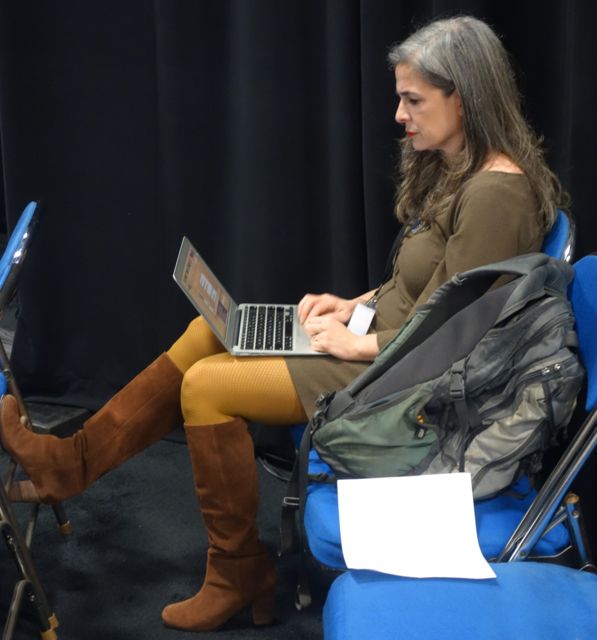
Pauline Frommer, pictured above in a pensive moment, is sort of travel royalty. Her father is Arthur Frommer, who practically invented the travel guidebook, and who, at age 86 is still quite the traveler. Pauline now runs the Frommer’s publishing empire, but is as approachable as she is smart.
Her speeches are always a wealth of information, based on research done by the company:
The best airline search engines for finding low fares are surprisingly, skyscanner.com and momondo.com.
The best site for hotels is hotelscombined.com, followed by trivago.com, and Agoda.com for Asia.
Rivercruising.com is the place for comparing those kinds of cruises.
To simplify travel insurance, check out squaremouth.com and insuremytrip.com.
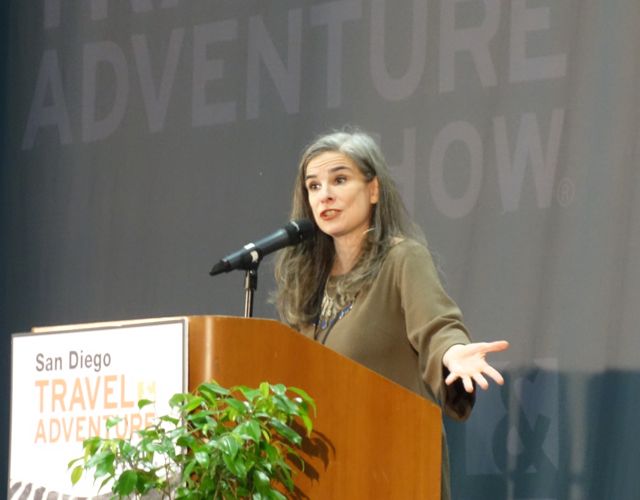
Peter Greenberg, the Emmy award-winning investigative reporter and CBS News Travel Editor also spoke at the show I attended, but unlike Samantha, Patricia, and Pauline, I didn’t get a chance to speak with him. He gives a no-nonsense speech about travel though, and delivers a lot of detailed advice on how to do battle with the airline and hotel industry.
You should allow a half-day just to listen to these celebrity travel speakers. You will come away much smarter.
Samantha Brown cited a study by projecttimeoff.com that found 4 in 10 American employees finished the year with unused time off. It resulted in 429 million unused days off. The rest of the civilized world thinks we’re crazy. They’re right. Get out there and travel! A travel show is a great place to get started.
Why it pays to be loyal to a hotel chain
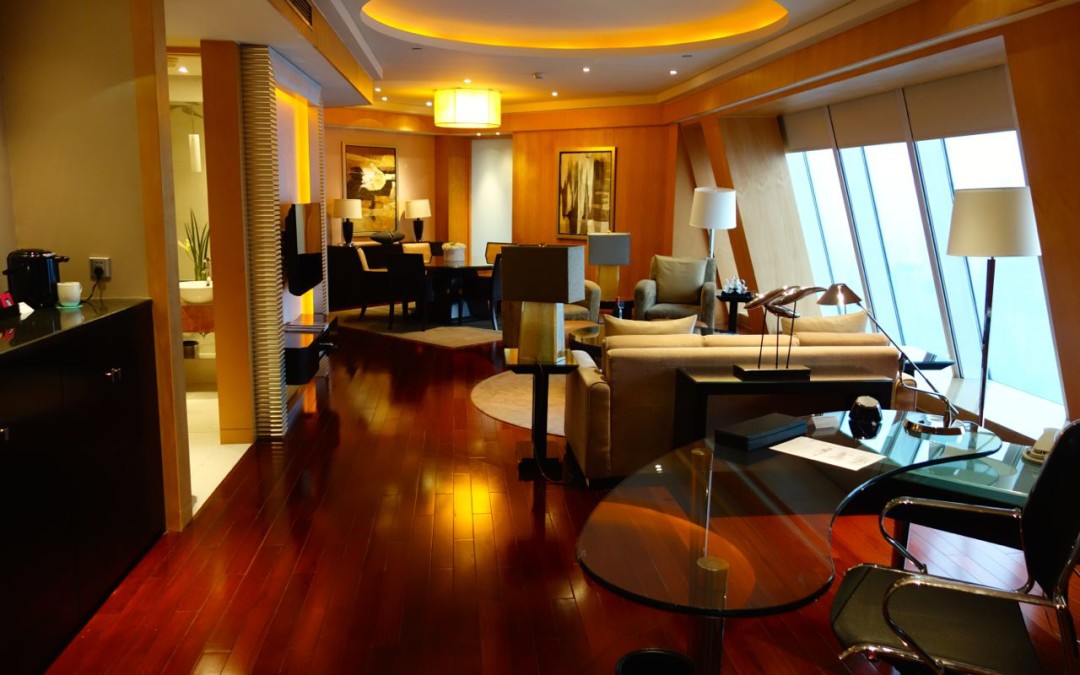
The hotel in Bangkok gave me a luxurious suite. In the morning I feasted on their sumptuous buffet breakfast. They granted me a 7:00pm checkout, since I was taking a late-night flight. All for free. It pays to be loyal to a hotel chain, in this case the former Starwood, now Marriott program.
To be upscale on a budget almost requires one to be loyal to travel programs from hotels to airlines. Yet, I have met so many people who say, “Oh, I just stay in the convention’s recommended hotel.” “I just picked a flight on Expedia.” They are missing out on a chance to move upscale, while still holding to a budget.

Personally, I made a decision more than a decade ago to try to stay in Starwood properties whenever possible. They offered plenty of choices across a range of prices, with The Luxury Collection and St. Regis on the top end, then Westin, W, Le Meridien and Sheraton, and specialty brands, like Aloft and Elements. With more than a thousand properties in 100 countries, I could usually find what I was looking for. I first achieved Gold status. Then 50 nights in a year led to Platinum privileges. Finally, 10 years in a row of Platinum earned me Starwood Lifetime Platinum.
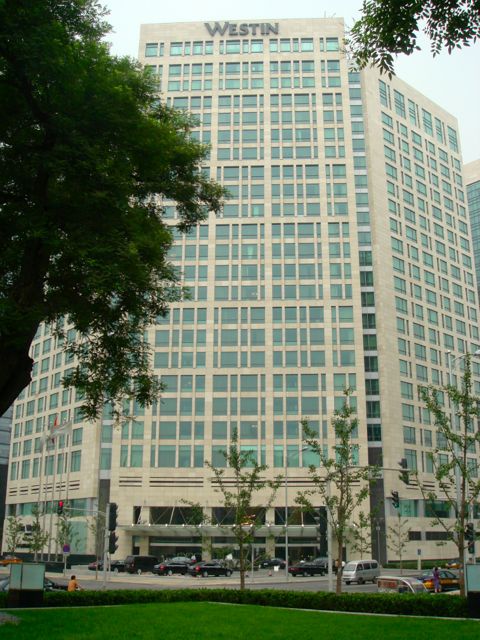
So what? Well, for example, as a Platinum member I usually book the cheapest room possible, because I know the hotel will upgrade me, often to a suite. Breakfast is included, as is a 4:00pm checkout. Lots of things that we all hate to pay for are complimentary, such as Internet, bottled water, fitness centers, and club-level rooms. I can even book a room when the hotel is sold out. I earn bonus points, which keeps me playing the game. If I absolutely require a suite, say on a family trip, I am awarded a number of suite nights a year to tap into. The list goes on.

The Starwood program I refer to got swallowed up in the 2016 acquisition of Starwood Hotels & Resorts by Marriott, and in August, 2018 they finally combined the programs. The result is a lot more properties to choose from, but a lot more people vying for the perks that come with elite membership. There are other good loyalty programs out there, depending on your preference. Just do your research and select the right program for you. Then stay loyal!
I plan a trip to Stockholm for the TBEX conference. The closest hotel to the convention center is the Radisson Blu, with a special TBEX rate of about US$200, including tax. I would be tempted to stay there, with the convention just a 5-minute walk from my 24-square meter room. But just 3 minutes further away is a Starwood/Marriott program hotel (Sheraton), where I could probably score a 37-square meter junior suite, buffet breakfast, etc., for the about the same price. Or I could drop the price to US$110, if I wanted to use some points each night (cash and points option) or totally free, if I wanted to cash in more points per night.
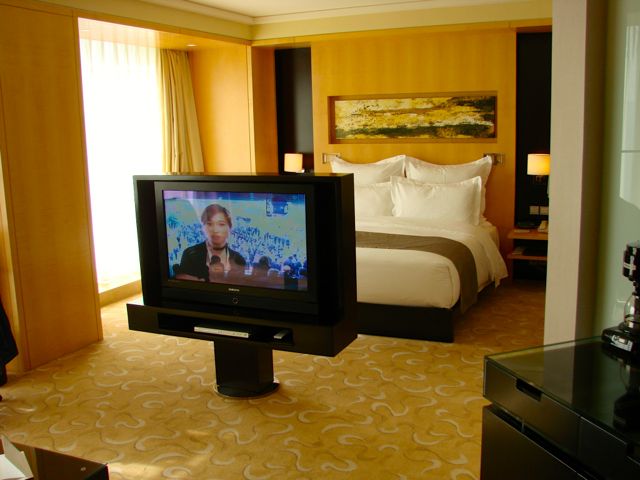
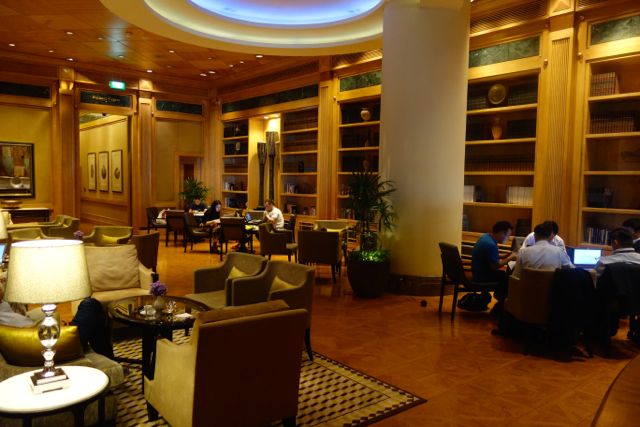
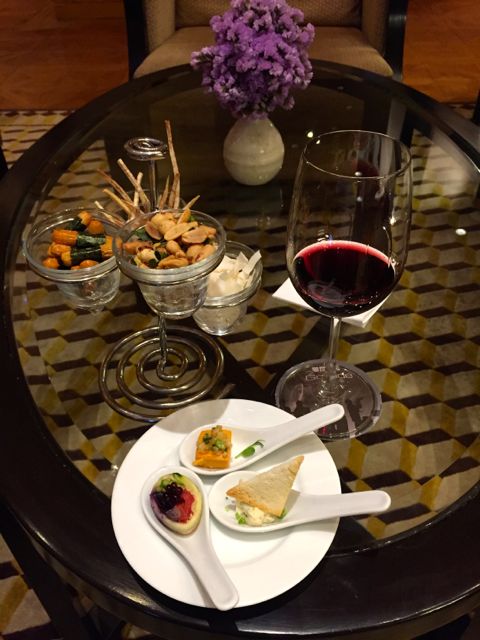
Ah, the points game. It’s not just about using airline miles. If you stay in 10 different hotel chains over the course of a year, you will rack up a scattering of points in each, basically of little value. But if you stayed loyal to the same brand, you may have earned enough points for a free night. The hotel in Bangkok I mentioned at the beginning of this article was the Sheraton Grande Suhkumvit, a Luxury Collection hotel. Besides the 4-room suite, amazing world-class buffet breakfast, and free drinks and food in the Library, I was staying for free (using points).
Don’t forget the almighty credit card. There is a reason the Starwood Preferred Guest (SPG) American Express card is one of the most popular among frequent travelers. I use this card a lot, especially for hotel stays, and it gives me enough points for about 10-12 free nights every year. Okay, I spend a lot. But if you figure an average upscale room in a major city costs about US$300 per night, including taxes, that Amex card can save me more than US$3,000 a year! Want even more flexibility? I also carry the Chase Sapphire Reserve card, whose elite rewards points can be used for airlines, hotels and more. What’s in your wallet?
You need to figure out what a point is worth to you. In my Stockholm example, to cash in 10K points in lieu of paying about US$200 a night, would make each point worth only 2 cents. The cash and points option is worse; each point is worth about 1.5 cents. I should pay the full rate and save my points for a better deal. I recently spent a weekend at the Westin Miyako Kyoto, Japan, where my room would have cost about US$500 a night. However, I was able to get a suite for just 10K points a night, so each point was worth 5 cents!
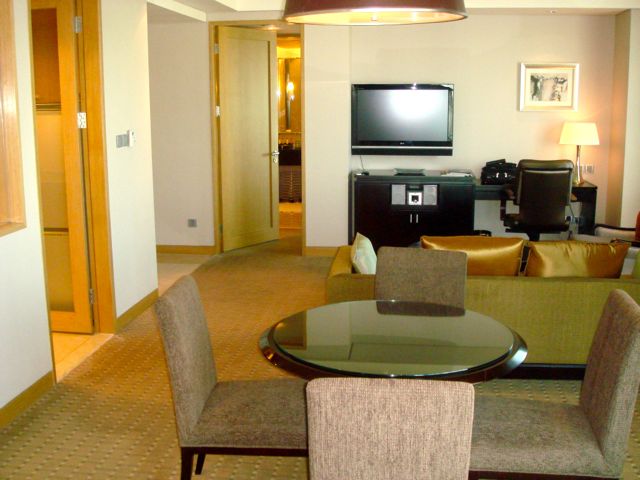
If you travel a lot and follow my advice, you can build up zillions of points to use in select situations, like my Kyoto example. So get out of that cramped room and enjoy suites and other amenities you might be missing out on today!
Coming up I will explain why it pays to be airline loyal too. Subscribe in the box below, and I will let you know when that post is written. And feel free to comment below the box.
How to save on business class flights
I didn’t want to spend US$18,000 for two Swiss business class tickets, L.A. to Zurich roundtrip. Later, the airline let me bid on those same lie-flat bed seats. Voila! … There is an airline flying business from the U.S. to Asia – wonderful Korean service for half the price of some other airlines, but with the same amenities. … From ANA to Air Canada, there are lots of exciting options out there. I will help get you started on flying international upscale on a budget.
Frequent flyers know by now there is a cat and mouse game being played. Premium class seats provide lucrative revenue; it’s a key reason why airlines expand business class sections on the larger aircraft and provide more amenities to those passengers. If they can charge, say US$9,000 for a seat, when the smaller one a few rows behind costs only US$1,500, it’s a pretty good deal for the airline. But what happens when that seat goes unsold? Airlines used to offer last minute upgrades to their most loyal customers – a nice perk, but not a win for the airline.
Bid for business class
As a creative move in the game, many airlines now offer economy passengers an opportunity to bid on those unsold seats. I paid about US$2,500 for two economy seats from LAX to Zurich. I just couldn’t justify spending US$18,000 for business. I want upscale, but on a budget. Think what I could do with all the money I was saving – luxury hotels, grand Airbnb apartments, personal tours and more. That’s the way I think.
Then, Swiss International Airlines sent me an email. How would I like to bid on business class seats? There were rules, of course, such as a minimum bid, timeline to back out, a commitment if I won, etc. But it was fun, too. I was able to see how many seats were still unsold and place a bid. They even offered a little real-time gauge that told me their opinion of my bid – weak to strong. In short, I bid what I thought was a fair amount, but a fraction of the original business price, and I won! Specifically, I bid twice, once on the outbound flight and later on the inbound, winning each time.
Guess what? The airline won too. They received money for two previously empty seats and may have also resold my economy seats. It’s a win-win. At least that’s what I told myself after a fine Swiss dinner, as I lay down for a good night’s sleep on the 11-hour flight. And don’t we owe ourselves a great start to an international trip?
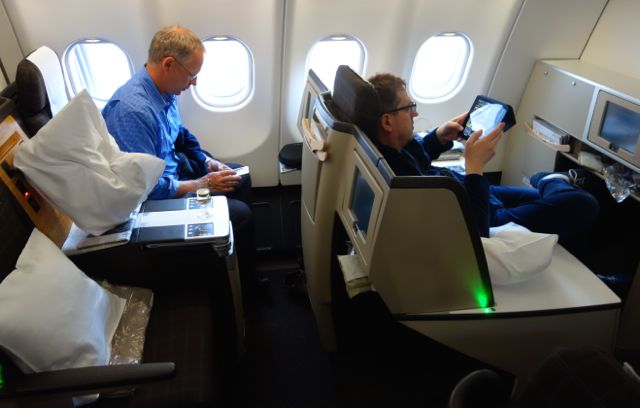
Maybe the only non-winner was the guy across the aisle, who might have paid full price. But variable pricing has always been part of the airline’s game. And he was assured his seat. I had to bid for ours. I could have lost. Or it could have been a full flight, without even an offer to bid. That’s all part of the game.
Many airlines are using a third-party company to manage this complex auction for them. If you are interested in more details about the game, here’s a Guide to Bidding from The Points Guy. Note: I would rather send you to a site that tracks these kinds of programs, as rules can change often.
Asiana Airlines
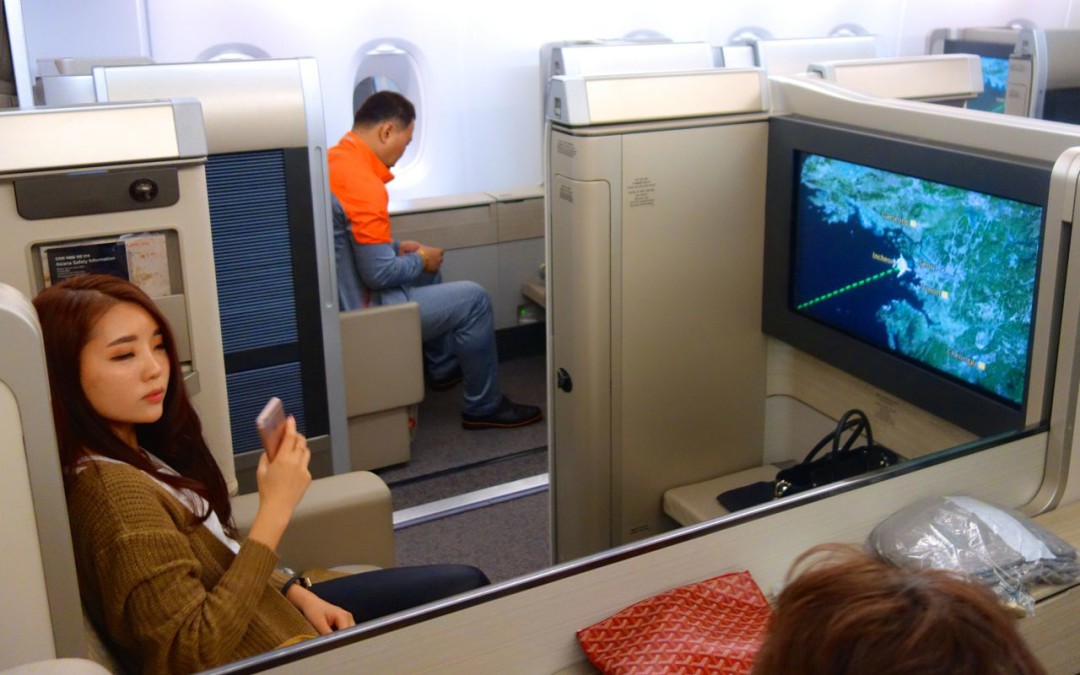
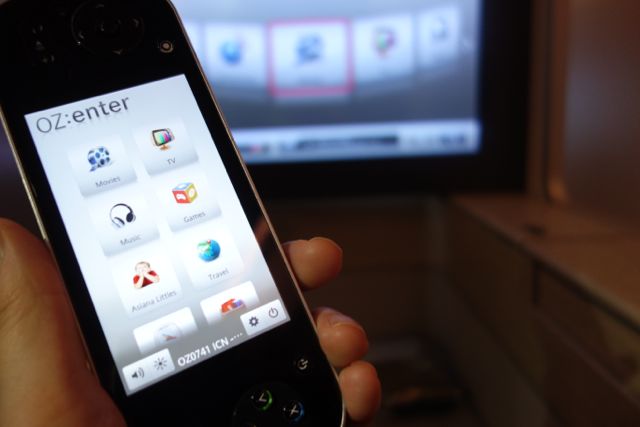
One of my favorite airlines in the world is Asiana – the “other” Korean airline. They offer award-winning service from always friendly and courteous flight attendants and ground staff. They are one of only 7 Skytrax World 5-star Airlines. But the best news for upscale travelers on a budget is their discounted business class. I have rarely paid much more than US$4,000 to fly from Los Angeles or San Francisco to numerous destinations in Asia – Beijing, Hong Kong, Shanghai, Bangkok, etc. I have been flying them regularly since 2006.
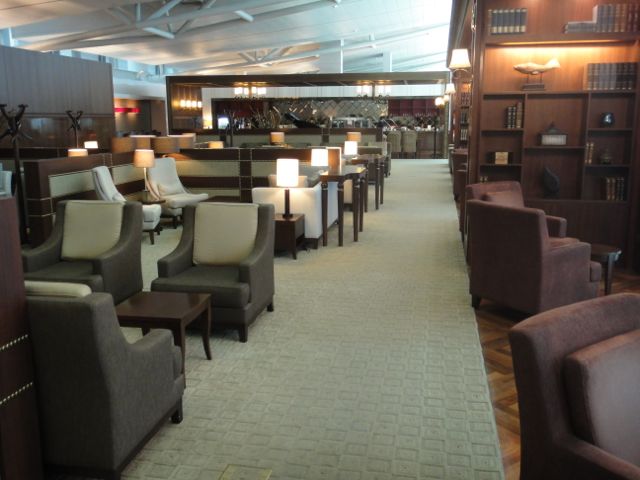
What’s the catch? Well, nearly every route includes a plane change in Seoul (Incheon), South Korea. Not that it’s a bad thing. The Incheon airport is consistently rated the second-best airport in the world (behind only Singapore). There are loads of things to do. And the Asiana business and first class lounges there are excellent. Think massage chairs, showers, Korean food and drink, all in spacious surroundings. The stopover also breaks up the long trip a little.
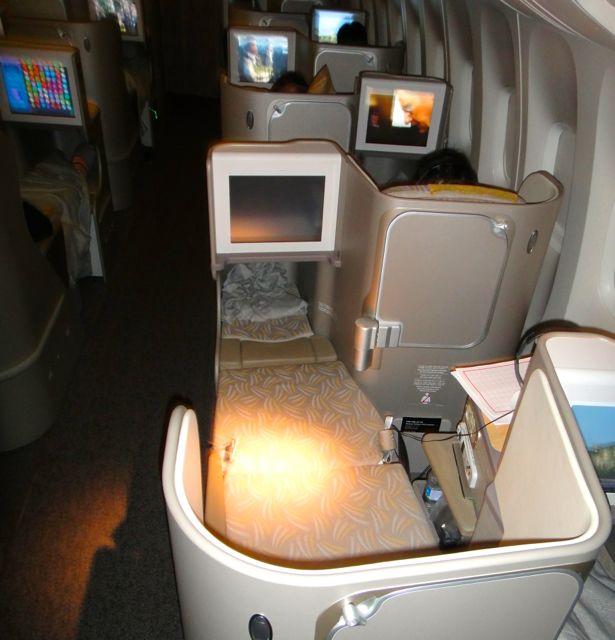
Asiana’s “Quantum seating,” with lie-flat beds and large monitors, matches any business class in the sky today, but in some cases at half the price. I almost hate to tell everybody, as they only offer two flights a day out of LAX. On top of that, I use a Korean travel agency in Los Angeles, who often discount the price even further. If you are interested in this option, email me at [email protected] and I will send you more information.
ANA (All Nippon Airways)
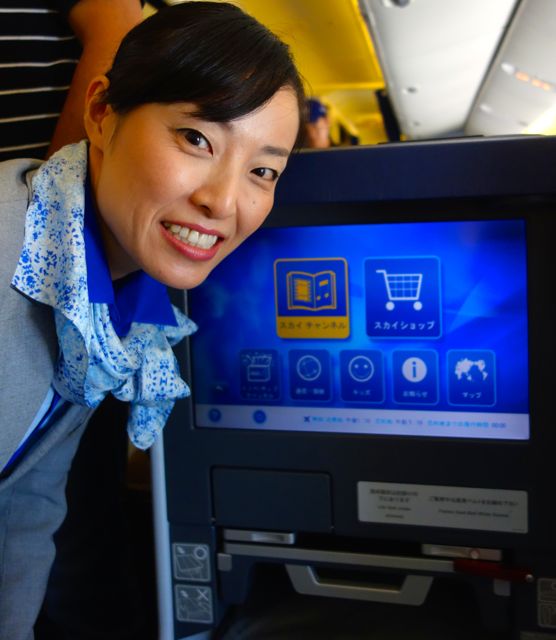
Speaking of favorite airlines, I have to mention ANA for those same Asia routes, except their stopovers are in Tokyo. Another World 5-star Airline, they also sometimes offer great business class pricing. One trip this year, I extended my layover in Japan from 5 hours to 5 days, which allowed me to visit Kyoto, for only a slight additional charge. Now that’s upscale on a budget!
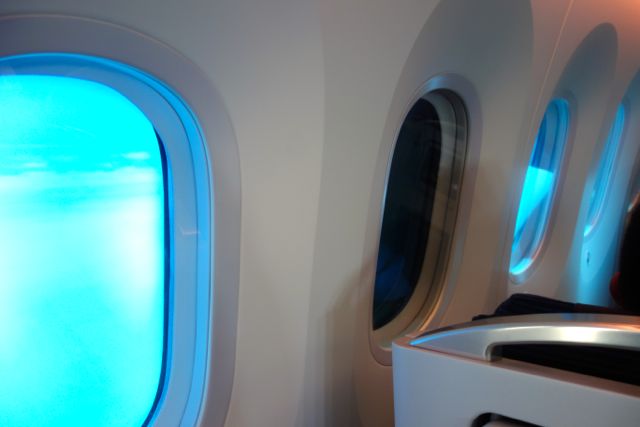
ANA has some of the newer aircraft flying trans-Pacific. My most recent journey was on a plane where pull-down window shades were replaced by push-button dimmers, as seen in the photo. Pretty cool.
For travelers in the Western U.S. and Canada, Air Canada is another interesting alternative worth investigating. Their flights to Asia are direct from Vancouver. The prices for business class look very good, although I have not used them yet. Why? There are significant change fees, and it seems I am often changing my travel dates.
There are so many ways you can fly business class on a budget. I am only touching on a few in this post. Some major methods involve mileage upgrades and sharing miles within a network, which I will post about later.
Sites like Expert Flyer offer lots of information, including seat alerts. Of course, you should always check Seat Guru, to see if those business class seats you are reserving really do turn into lie-flat beds. Traveling Well For Less explains how to best turn your credit cards into miles.
What do you think? Do you have any advice for flying business class on a budget? What sites do you use? Please comment below!

Changes in latitudes, changes in attitudes
Am I really 14 1/2 hours ahead of Los Angeles? Why am I now craving pizza in a land of delectable Thai food? Do I even care about the U.S. news anymore? These are just some of the reflections from a month on the road in Asia. And I spend a lot of months away from home. What reflections do you have when you change your latitude?
Apologies to Jimmy Buffett, who ran into a chum with a bottle of rum, and we wound up drinkin’ all night. I have no such excuse for what I am writing now, but it strikes me there are some tips and advice in here somewhere. So here goes, still under the influence of jetlag.
#1. I only suffer jetlag returning from Asia. Thanks, NASA!
Yes, studies by NASA and others with lots of degrees behind their names have told us that it is harder to adjust our body clocks when traveling from west to east. NASA’s chief of fatigue management (nice title) also says it takes about a day to adjust for every time zone. So when I drop back 15 hours flying from China to the U.S., I’m supposed to take a couple of weeks to adjust?
After a decade of those flights, I have yet to figure out how to beat the system. I have tried Ambien and Melatonin and eye masks and alcohol and abstention. Frankly, nothing works, although I am usually pretty normal in 4-5 days. If you have the magic answer, let me and countless others know by commenting below.
#2. What time is it? In fact, what day is it? Do I even care?
I’m sitting in Yangon, Myanmar contemplating a Skype call to California. My world clocks app tells me to adjust back 14.5 hours. So, I email the family to expect a call from me sometime yesterday. Except it is 3:00am there, so they don’t see the email anyway.
That reminds me that I have lost track of what day of the week it is. I got to Myanmar on a Thursday, I think, but it was a holiday, and who has a holiday on Thursday? Oh yeah, Lunar calendar, full moon, got it. At this point do I even care what day of the Roman calendar we are on? I will just let people back home know I am hopelessly lost in time.
#3. Why am I craving pizza, pasta and Mexican food?
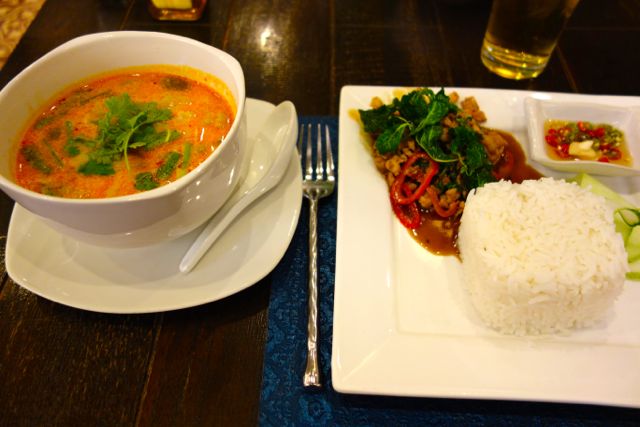
The menu in Thailand is full of delectable items, from Tom Yum Goong to Pad Thai to Duck in Red Curry. So many wonderful choices. Why am I craving Italian and Mexican food? I don’t know if NASA has studied this, but after several weeks in Asia, I start dreaming about cheeseburgers in paradise.
My theory, and I don’t have a PhD, is that Americans like to eat all kinds of cuisines on a regular basis. We will eat pasta one day, burritos the next, then Chinese, then pizza, then fish, then a salad, and so on. In China, they eat Chinese food – every day. OK, it’s incredibly delicious, but eventually even KFC looks good to me. Is that normal?
#4. Security and shoes and chargers and Global Entry
Airport security in the U.S. sucks. There, I said it. Please don’t put me on a watch list. On my recent trip to Asia I take 12 flights. The toughest security measures are in trying to leave LAX. I’m Global Entry and TSA Pre. It doesn’t matter. Stand in a long line. Take out every electronic device, in fact, anything sort of metal. Take everything out of your pockets.
Take off your shoes. On December 22, 2001, a guy had explosives hidden in his shoes. Since then, about 10 billion American flyers have had to remove their shoes. It is the only one of my 12 flights where I have to do that. Then again, we don’t get blown up.
To be fair, I have had device chargers confiscated in China. To solve the problem, I bought my latest charger in China. Also to be fair, Global Entry does work on returning to the U.S. from abroad. This time arriving at LAX, I make it from gate to kiosk to curb in 15 minutes. It’s the best $100 the government will ever take from you.

#5. Am I looking forward to traffic on the 405 freeway?
It’s 8:00pm, and I have naively waited for rush hour to clear a little. I’m taking a taxi from central Bangkok to the airport. But there’s a problem. I’ve been in the taxi for 20 minutes and haven’t made it from the hotel to the street yet; traffic is virtually stopped. Eventually we inch along a pace that is slower than walking. And I have a flight to catch. It’s like that every day here.
Of course, it could be worse. I have come from Myanmar, where every form of transportation is an adventure. Yangon, which doesn’t allow motorbikes, is now overrun by cars, and without the roads to support them. Trains are the butt of all jokes. Busses are slightly better.
Near Myanmar’s Inle Lake, I am faced with a 40-minute walk to the market. The solution is to jump in the back of a sort of motorized wagon, as we bounce over the muddy, rutted path. I ride on the back of a motorbike on the way back. It is one of the US$400 models made across the border in China. I tell him to “take it slow.” It hardly matters.
Yes, when I encounter an accident and Sig Alert on L.A.’s 405 freeway on the final leg of my journey, it seems almost acceptable. I’m driving a Lexus on a real highway. I’m sure traffic will clear anytime now.
#6. Why am I starting not to care about news from the U.S.?
When I first leave the U.S., I find myself checking the ESPN website, reading The New York Times International Edition and searching for CNN on TV. With each passing day my interest in U.S. news wanes. “What was the score in yesterday’s football game?” becomes “Is my team still playing?” morphing into “Why is every football game on TV played with a round ball?”
I am reminded just how U.S.-centric the news is in America by how many interesting stories are presented to me internationally that would never be covered in the States. I can’t avoid the global news – there’s a television built into my bathroom mirror. I become a citizen of the world. I feel more intelligent. Still not smart enough to understand rugby from Australia. “That guy was tackled and down! Why is play still going on?”

#7. I’m still glad I carry a drug store in a Ziploc bag
Bugs are attracted to me. Mosquitoes think I am dessert. How else can I explain the several bites that are showing up on my arm? And I am inside the convention center in Bangkok. Thank goodness a tube a Benadryl is as close as my hotel room inside my drug store in a Ziploc bag, fully explained in another post.
How charming and quaint was the building on stilts as our longtail boat pulls up to the dock. Inside we find some ladies from Myanmar’s Kayan tribe, with their long neck rings, weaving and selling clothing. We have stepped back in time. Unfortunately, my stomach has taken a step back also. Nothing in that local store can take the place of the western medicine I carry with me. My drug store in a Ziploc bag comes through again, as it does time after time.
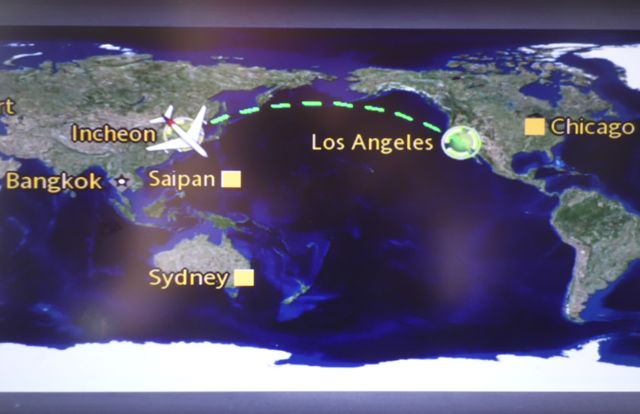
#8. It’s going to take 31 hours to get home?
I enjoy looking at those old ads for Pan Am or TWA, showing well dressed people smiling as they are served their steak dinners in-flight. These days the romance is gone. We treat flights as almost a necessary evil.
I am both upscale and on a budget, so I enjoy the comforts of a lay-flat bed on Asiana, but still endure an 8-hour layover in Seoul to save hundreds of dollars. I’ve done all the free tours of Seoul, offered as a nice perk by the airport, so this time I confine myself to the business lounge.
#9. Final reflections
Reading departure signs in some big airport
Reminds me of the places I’ve been.
Visions of good times that brought so much pleasure
Makes me want to go back again.
You got that right, Jimmy.
I may be tired and jetlagged, but already dreaming of the next trip. On this one I make new travel friends from all over the world, visit old friends, see a new country in the midst of historic change, and as usual, come back a little wiser about this planet we inhabit.