
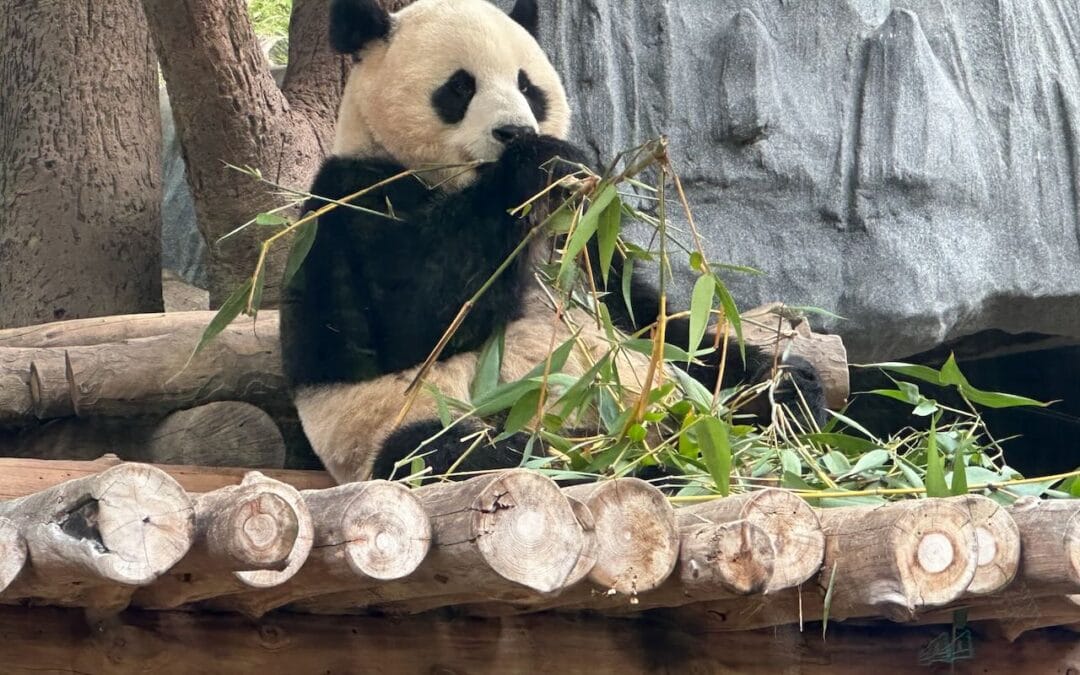
The planet’s most recognizable bear has only recently been upgraded from “endangered” to “vulnerable.” With few in existence, we figured it was time to provide a guide to help you visit pandas in San Diego and worldwide. Learn where and how to see this cultural icon, with a special emphasis on the San Diego Zoo and China’s Chengdu Panda Base.
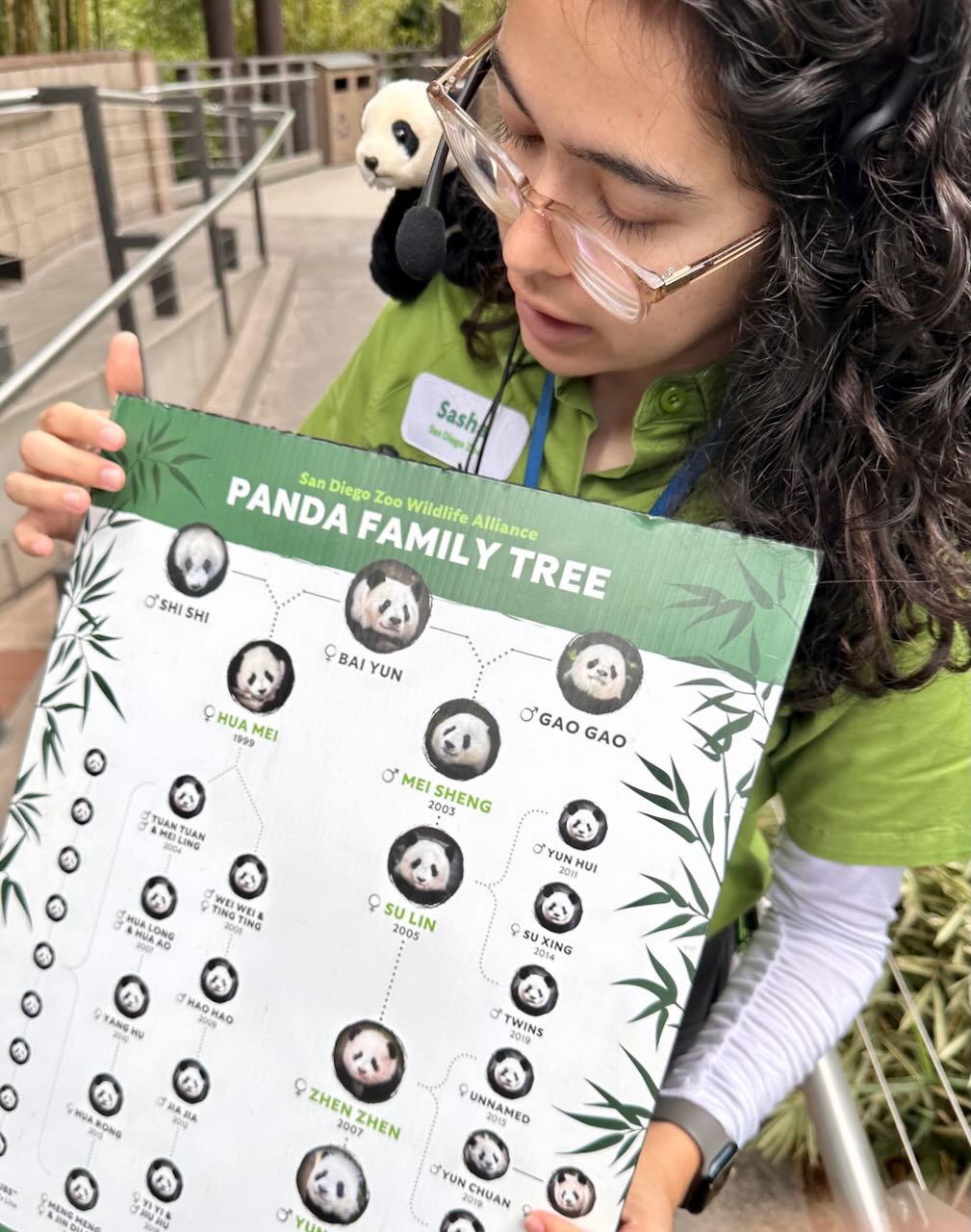
Yun Chuan is the son of Zhen Zhen (a panda who was born at the San Diego Zoo in 2007). Yun Chuan’s grandmother, Bai Yun, lived at the zoo for 23 years. There’s a lot of important history here. San Diego received its first pandas from China in 1987. In 1996, a partnership was formed with China’s Wildlife Conservation Association. The collaboration and scientific exchange over the years has led to groundbreaking advancements in breeding techniques, living and eating habits, and much more. Early on, a newborn panda had only a 10% chance of living. Today, thanks to the partnership, the survival rate is 95%! It is a major factor in the upgrade to “vulnerable,” as the population has nearly doubled to an estimated 1,900 in the wild and 808 in captivity.
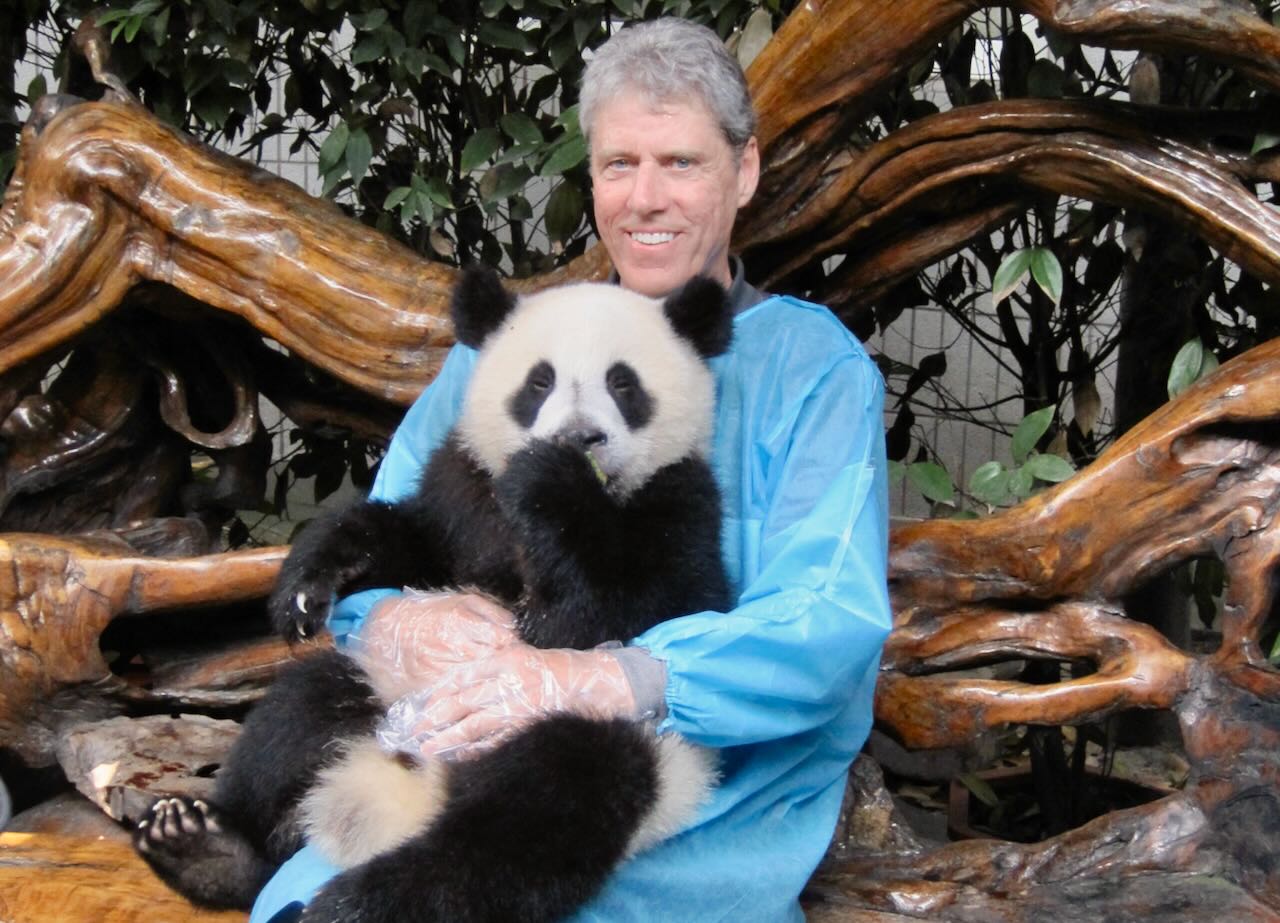
Can I hold a panda?
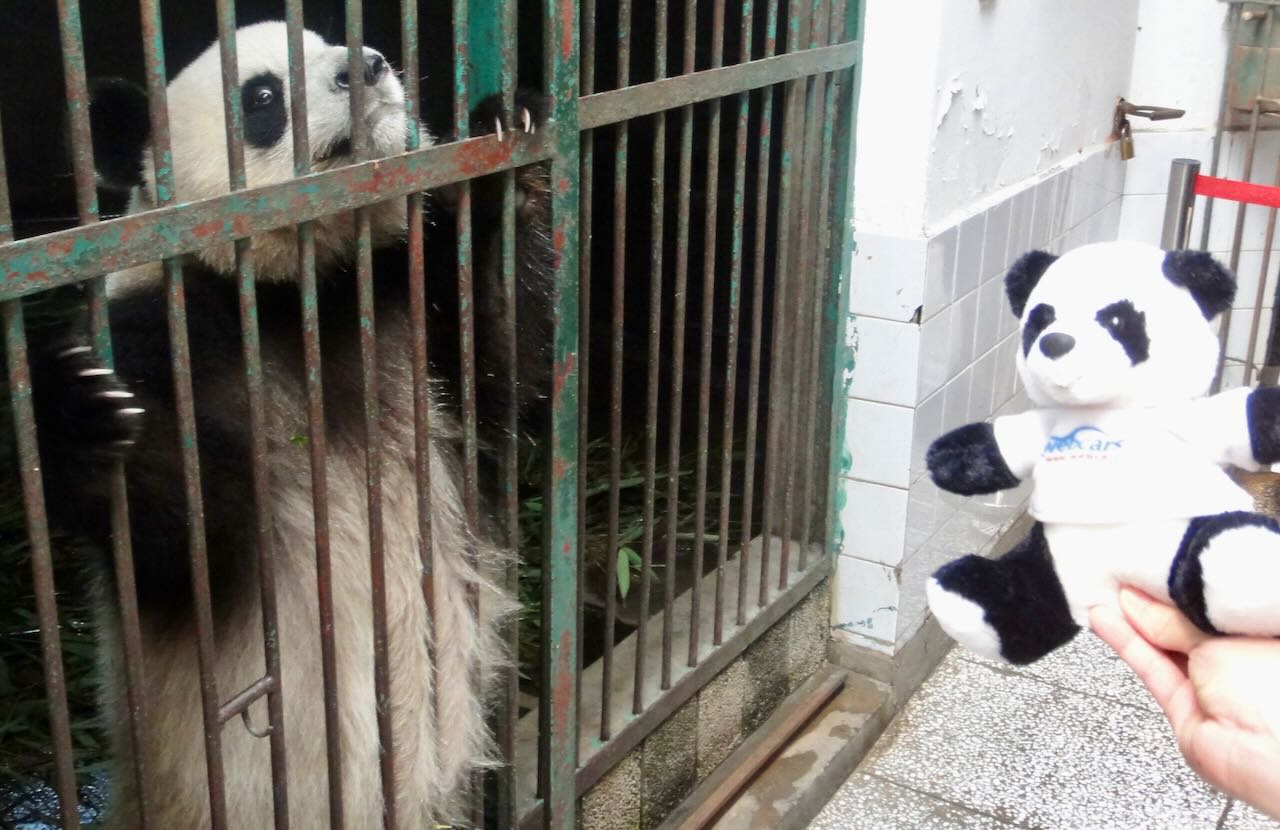
The emphatic answer is “no.” So, is the above photo real? Yes. But it was taken back in 2011, when it was possible to hold a panda at the Chengdu Panda Base in China. I realize now it was a once-in-a-lifetime opportunity for both me and my friends to hold a teenage giant panda for several minutes. The panda munched on his favorite treat, watermelon, as a distraction. It is now considered too dangerous, as well as stressful (for both parties).
Some more facts about pandas
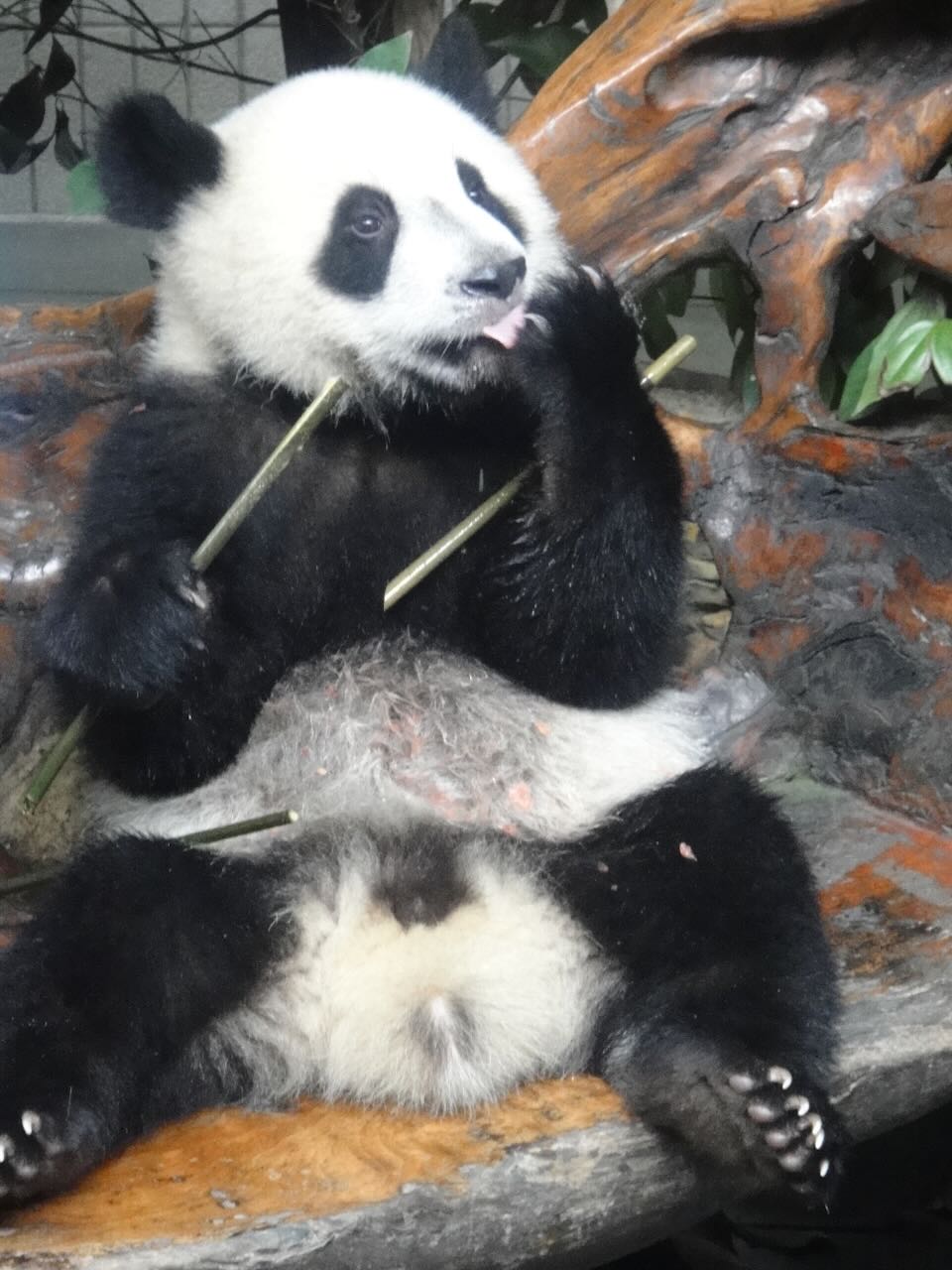
When we visualize a panda, we think of a 200-pound black and white cuddly bear. How they got that size is a story in itself. Giant pandas are born as blind, pink, hairless little critters; they are about the size and weight of a stick of butter. In fact, the cub is just 1/900th the size of its mother. Imagine if a human newborn were the size of your finger! It can take two months for pandas to open their eyes, and they aren’t mobile until 3 months old.
Let’s dispense with the “cuddly” myth too. They are bears, after all, with sharp claws (see photo on my lap) and a bite force comparable with a lion. And there are strong teeth to go with those powerful jaws. They use those teeth to crush branches and leaves of bamboo into digestible bits. It’s their preferred food from their natural habitat in south central China. Bamboo is low in nutrients, so pandas must consume from 50 or more pounds a day! Much of the day can be spent chomping.
Pandas are solitary animals. Zoos have two for breeding purposes, but you won’t find them housed together or bonding like some other species. Most habitats keep them completely separated, except when, well, you know.
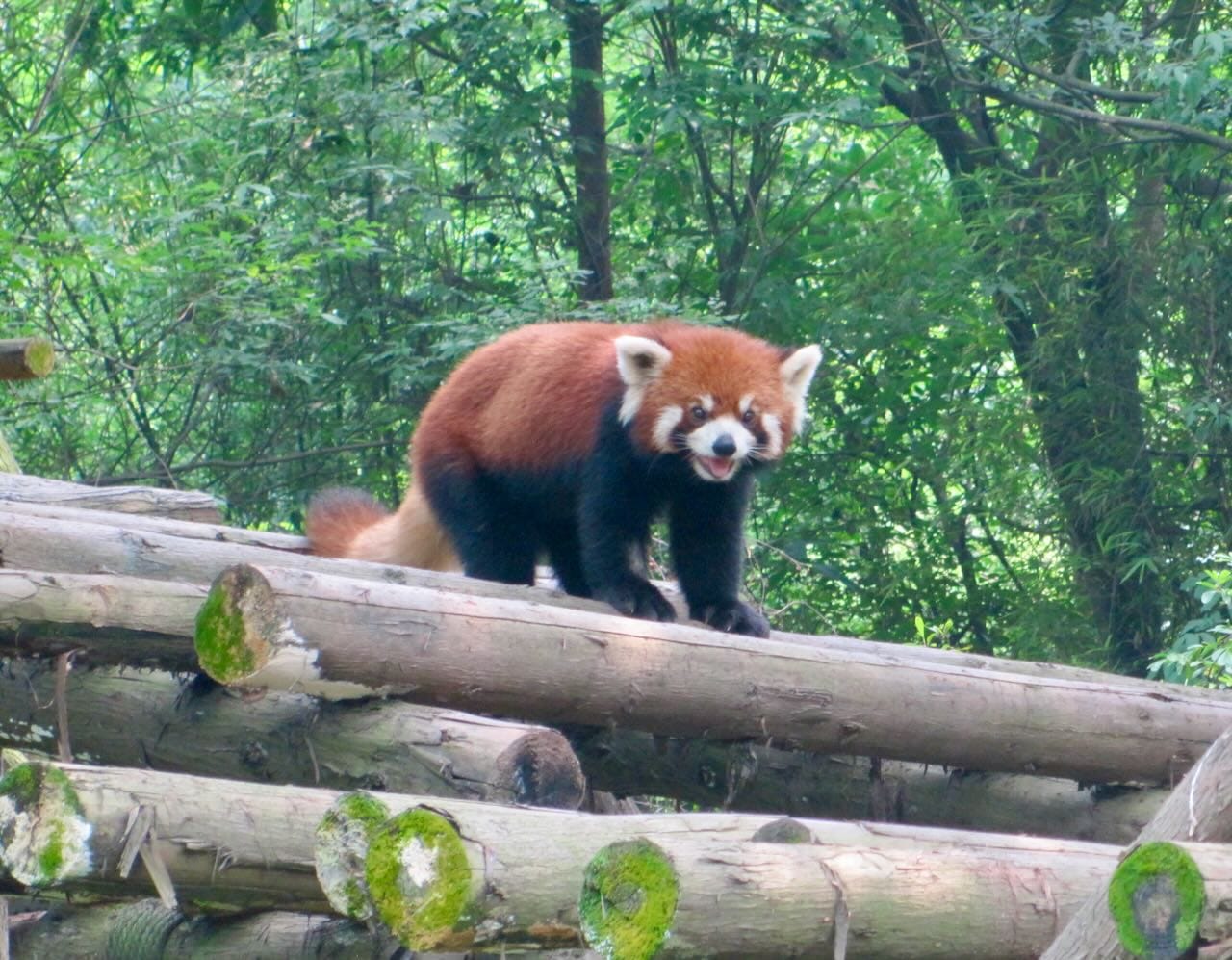
Not all pandas are black and white. Another species is the foxlike red panda. Most zoos will feature a red panda too. Now, a word about activity. You have heard of nocturnal animals – active only at night. Humans are diurnal, naturally active throughout the day. Red pandas are crepuscular – most active at dawn and dusk. Giant pandas follow a similar pattern. Why does this matter? You will see a more active bear when the zoo opens in the morning or at closing. Arrive midday, and you are likely to see pandas napping (if visible at all).
San Diego Zoo
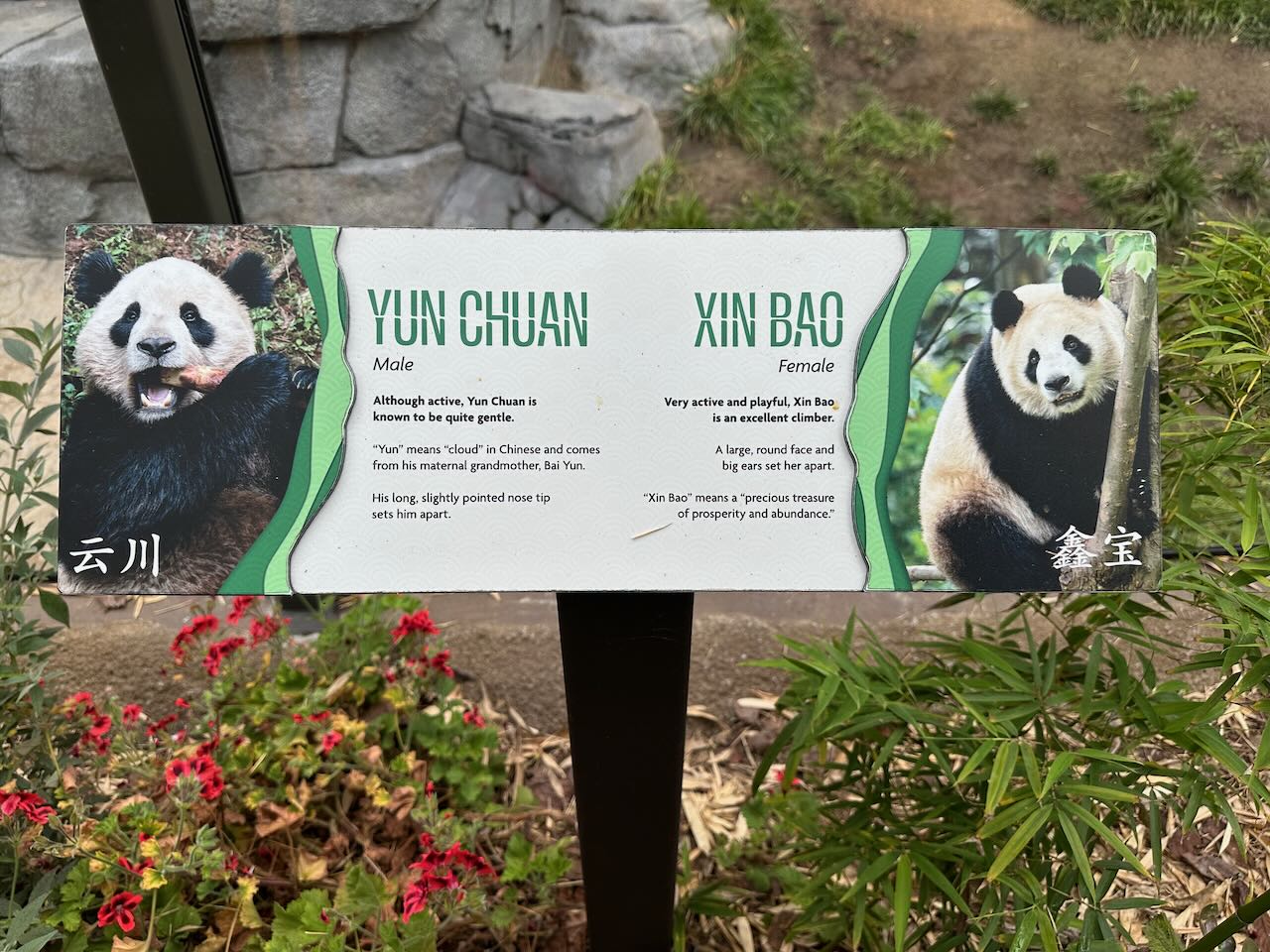
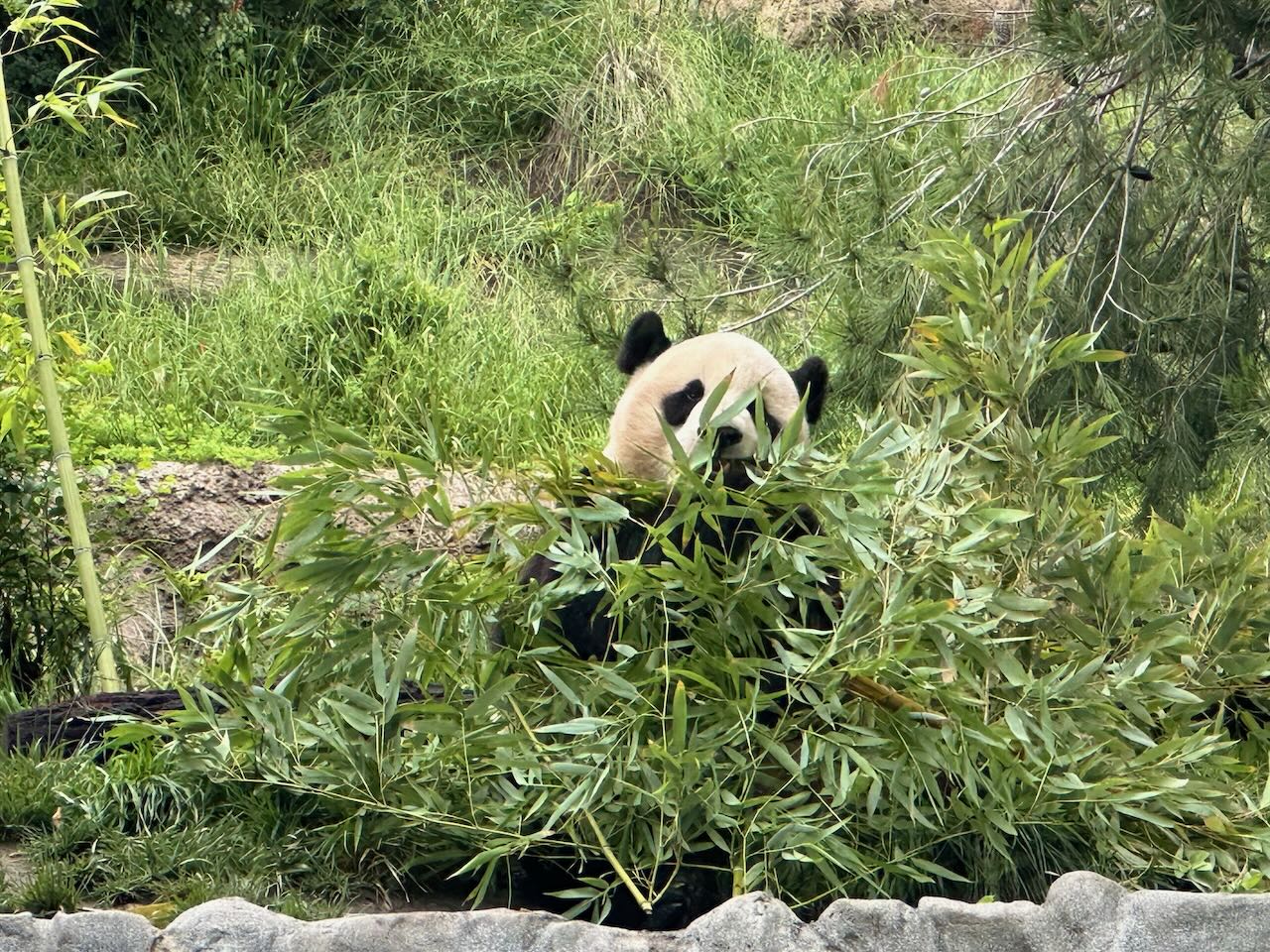
Armed with our newfound knowledge, we are ready to visit the San Diego Zoo. Unlike the story of Goldilocks, there are two bears to encounter, Yun Chuan (born 2019) and Xin Bao (born 2020). But there are three ways to see them.
1. On weekdays, you can enter a standby line as early as a half-hour after zoo opening. After waiting in line for 30 minutes to an hour or more, you will be ushered through the Panda Ridge for about 10-15 minutes of viewing. Goldilocks would say “too hard” to this option.
2. On weekends, the park is more crowded. If you arrive early, you can get a free timed ticket to see the pandas from a daily allotment. Score a ticket and show up at that time for your 10-15 minutes. Goldilocks says, “too soft.”

3. Sign up online for the “Early Morning with Pandas Walking Tour.” This sells out during busy times, such as holidays, spring break, etc., so book in advance. The cost is around $100 for a private guided unrushed hour at Panda Ridge before the zoo opens to the public. And you know that’s when pandas are most active! Group size is reasonable (about 25 people) and the knowledgeable guide will explain panda care and conservation. Goldilocks says, “just right” for the upscale traveler. Bonus: You have visited the pandas and still have a full day to see the gold standard of America’s zoos.
Another fun fact: August 8 is now officially California Panda Day, commemorating the auspicious day in 2024, when Yun Chuan (meaning “big river of clouds”) and Xin Bao (“prosperous treasure”) made their debut at the zoo.
Other zoos in the United States
It is a complicated process to qualify for a 10-year loan of pandas from China. “Panda diplomacy” can be expensive ($1 million annual fee) and still fraught with political overtones. San Diego’s long-term success has largely been the result of its cooperative breeding advancements. Other zoos, such as Atlanta and Memphis, no longer house these icons. Calgary, Canada, had to return its pandas due to a bamboo shortage during the pandemic.
At dinner with Chinese Premier Zhou Enlai in Beijing in 1972, First Lady Patricia Nixon mentioned her fondness for giant pandas. Shortly afterward, two pandas arrived in the United States. Today, the Smithsonian’s National Zoo, in Washington, D.C. is home to Bai Li and Qing Bao. They made their public debut in January, 2025. After a $25 million renovation, the zoo’s giant panda habitat features both elaborate indoor and outdoor areas to accommodate the city’s hot summers and chilly winters. As an added benefit, admission to the zoo is free. However, the zoo asks that you limit your panda habitat visit to 10 minutes.
Pandas in Europe
We have learned over the years that visiting pandas around the world is a fluid subject. San Francisco may receive pandas, but maybe not. Finland returned theirs due to high maintenance costs. France’s pandas returned to China, but they are anticipating another pair. The stories of panda comings and goings are too numerous to mention here.
Of note, Madrid is a safe bet, having received a new pair in 2024. Vienna hosts pandas in the world’s oldest zoo. Copenhagen’s pandas live in a world-renowned enclosure shaped like a yin-yang symbol. It features both a bamboo forest and a misty, fog forest. The Netherland’s Ouwehands Zoo has a panda habitat called Pandasia, built to resemble a traditional Chinese palace.
More panda locations outside China
The only two pandas living in the Southern Hemisphere reside at the Adelaide Zoo in Australia. Qatar received the first pandas in the Middle East as a gift during the 2022 World Cup. Obviously, a habitat had to be built for them to live completely indoors away from the desert heat.
Several other locations outside mainland China offer the opportunity to visit pandas. In 1999, a male (An An) and female (Jia Jia) arrived in Ocean Park, Hong Kong. Jia Jia would go on to live to age 38 (114 in human years), the oldest panda to ever live in captivity. And An An lived to be 35. Hong Kong continues to have a pair of bears. Under a different arrangement, the pandas and their offspring in Taiwan are not on loan, but owned by Taiwan.
Elsewhere in Asia, South Korea, Malaysia, Indonesia, and Singapore are places to view pandas. It takes a specialized, bio-dome habitat in steamy Singapore to create temperature-controlled creature comforts for their pandas. Unlike the man-made environment of Singapore, the “Panda Place” outside Jakarta, Indonesia, probably comes closest to pandas’ native Sichuan. The palace sits in a cool, misty climate at 1,800 meters (6,000 feet) on the slope of a mountain.
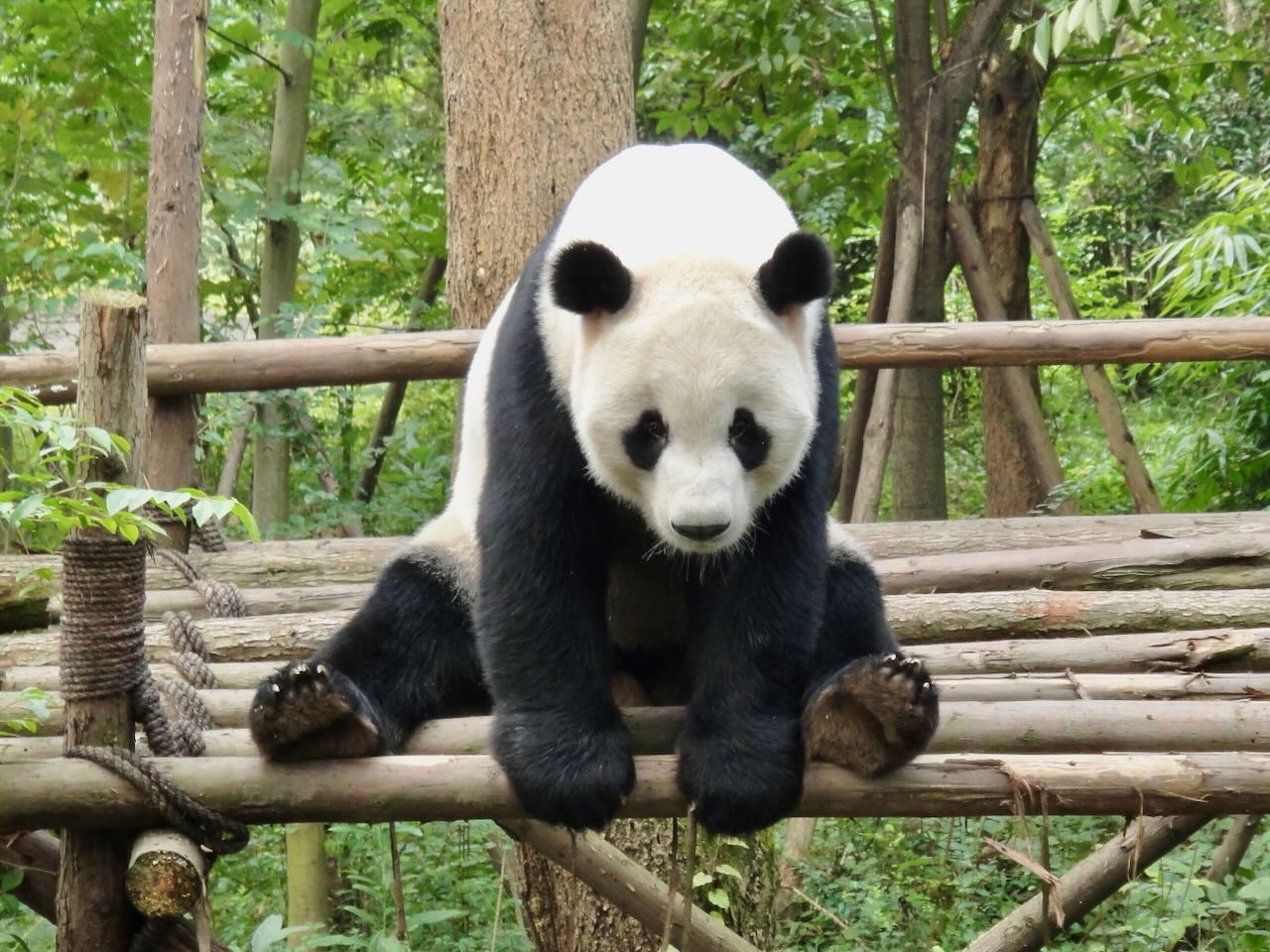
China, outside Sichuan Province
Remember when we said giant pandas were black and white? If you were to somehow make your way to the Qinling Mountains, near Xian, it is the only place you might spot a rare light brown and white giant panda. For those asking, according to Scientific America, it is missing a piece of DNA. Now you know.
Not surprisingly, most major zoos in mainland China house pandas. The Beijing Zoo has seemingly always had 8. Shanghai (11), Guangzhou (14), and Chongqing (20) are among the leading locations.
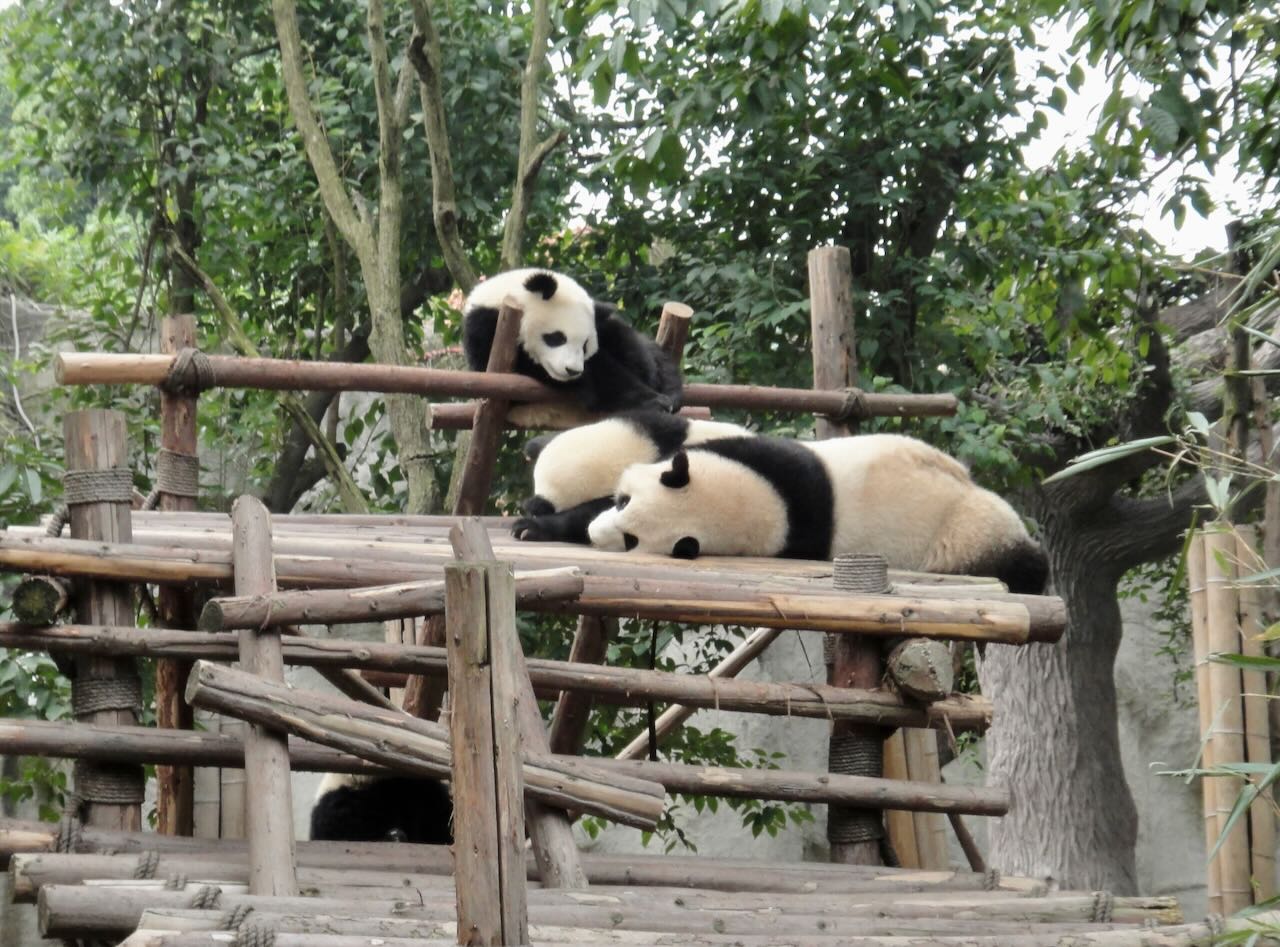
Pandas in Sichuan
The panda’s natural home is in the mountains outside of Chengdu, China. It makes sense that the official research and conservation efforts would be situated where wild pandas still exist in some 67 natural reserves. As of this writing, there are actually five locations to visit pandas in this region. Wulong Shenshuping Base and Ya’an Bifengxia Base are run by CCRCGP, China Conservation and Research Centre for the Giant Panda. Both are an hour or two from Chengdu. Wulong features pandas of all ages, including cubs. Ya’an may be the quietest base.
Two options closer to Chengdu are Dujiangyan Panda Base and Panda Valley. Both are a short train ride from the city. Dujiangyan has a countryside vibe to it at the foot of Qingcheng Mountain. Panda Valley is small enough to see everything in a couple of hours.
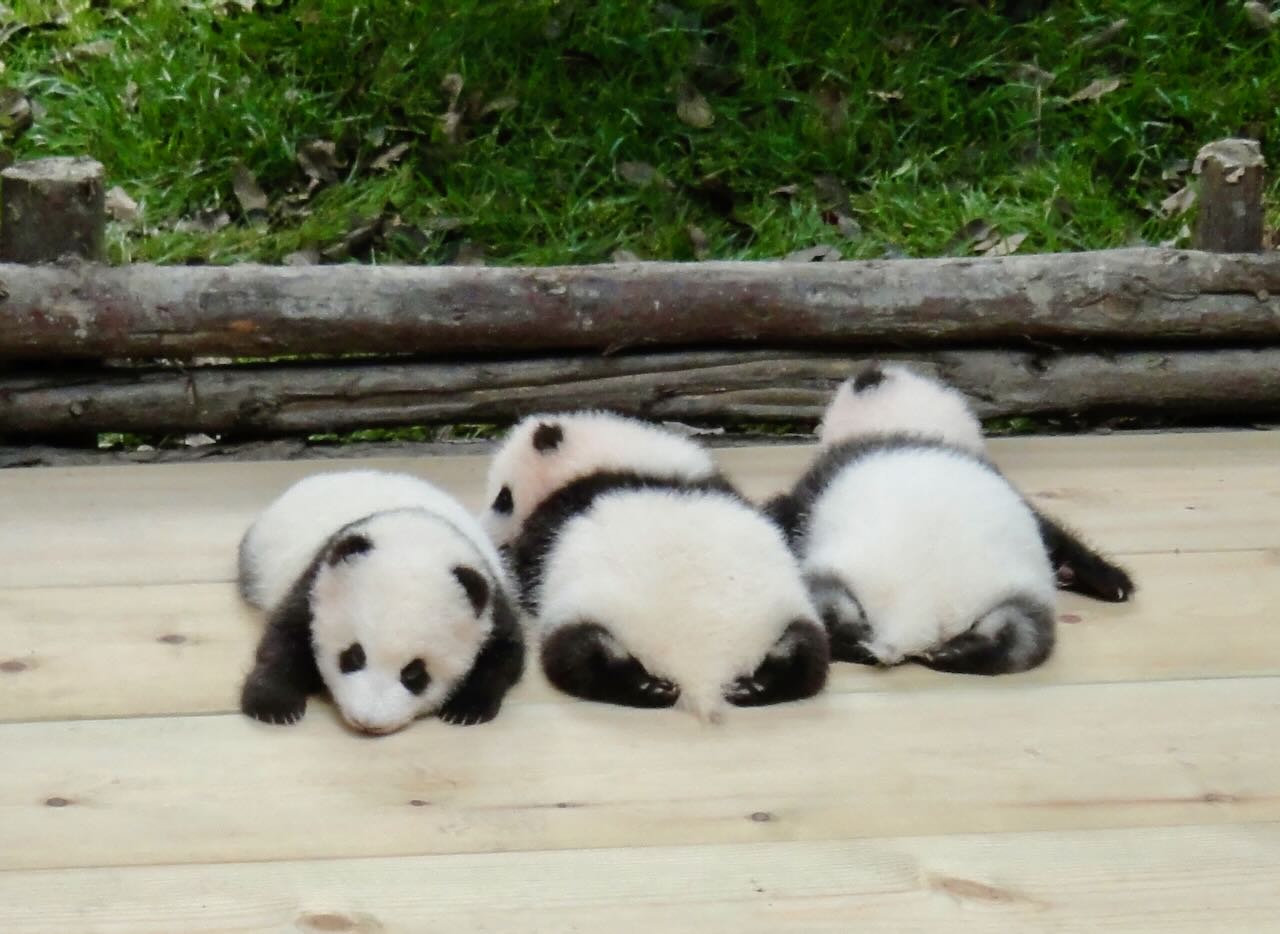
That leaves us with the most popular attraction, the Chengdu Panda Base, whose official name is Chengdu Research Base of Giant Panda Breeding. Despite its location in the heart of the city, it is the largest captive panda center in the world. We have visited several times, and it just keeps growing. In 2022, it expanded to cover 2.4 square kilometers (nearly 600 acres). The center houses well over 200 pandas, home to both giant pandas and red pandas. There is an extensive nursery that has seen more than 200 births. The grounds are covered with more than 2,000 species of plants, dominated by a forest of bamboo.
The center opens as early as 7:30am, great for watching active pandas. Get there early. Recent admission price was just 55 RMB (around $8). Foreigners must show their passport. An internal shuttle bus (30 RMB) makes the massive, hilly park more accessible. It is a convenient hop-on, hop-off electric cart system. Still, at least a half-day should be planned for your visit. The outdoor enclosures are large natural areas with low fences and ditches, allowing for maximum viewing. Note that much of the year Chengdu is hot and humid; Pandas are moved indoors as the temperature rises during the day.
More facts
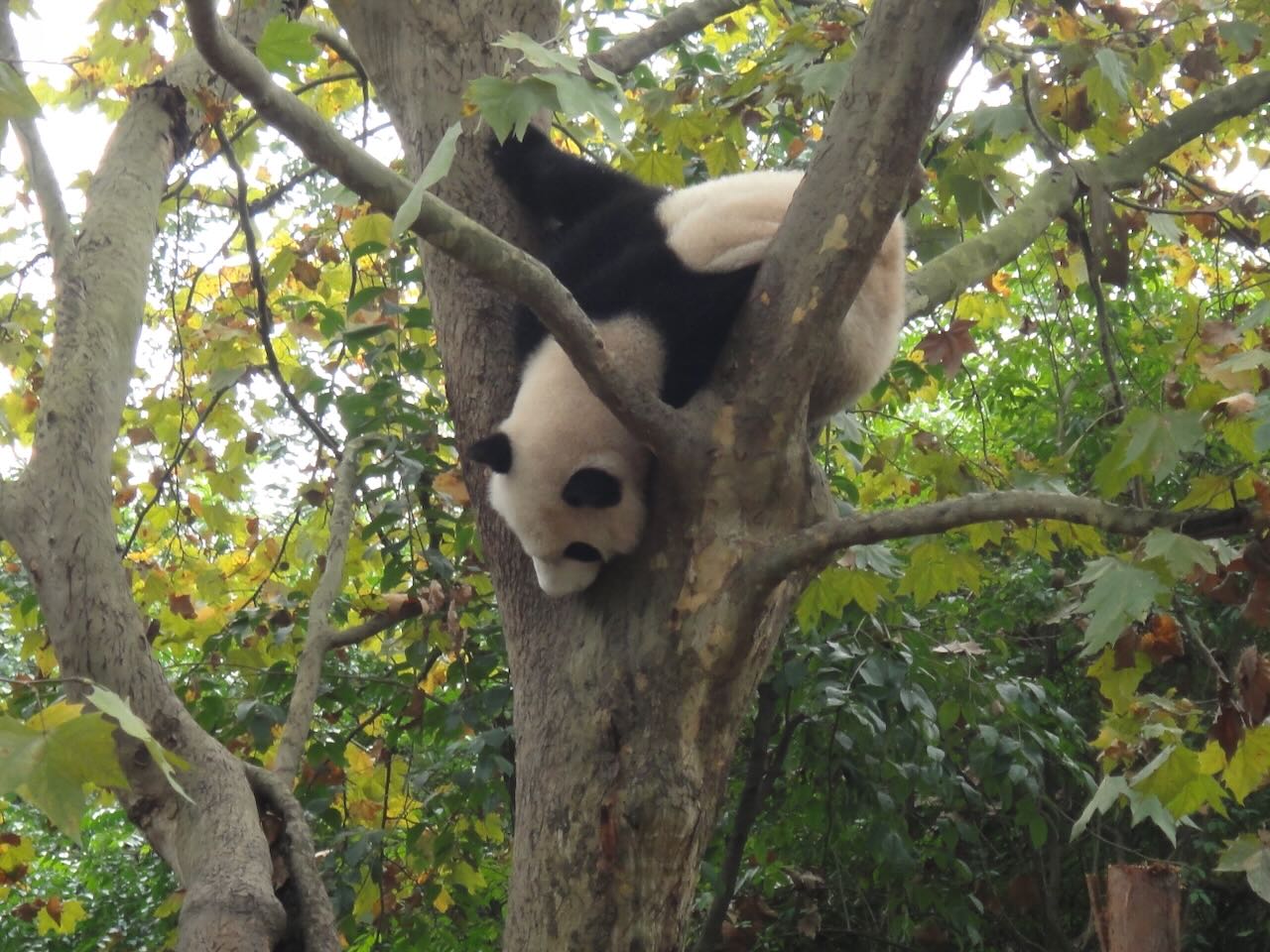
They may look big and clumsy, but pandas are pretty agile and are adept tree climbers. They can hang out in trees for hours. They are also good swimmers, though being largely herbivores, they don’t enter water to catch fish. The panda’s paw has five fingers, but also a pseudo thumb. That’s why you see it easily holding and tearing branches of bamboo to eat. A brown bear couldn’t do that – but he can be an expert at catching fish. To each his own.
In honor of bears everywhere: I have taught a little English to some people in China. Now, finally a chance to use my favorite English phrase. “I can barely bear to see a bare bear.”
Do you have any questions or suggestions to help others? Feel free to comment at the bottom of this post.
What’s upscale?
Choose the “Early Morning with Pandas” tour at the San Diego Zoo for the best experience.
What’s budget?
You have to get there first, but the Chengdu Panda Base offers a whole day of pandas for just 55 RMB ($8). Or visit Smithsonian’s National Zoo in Washington, D.C. for free.